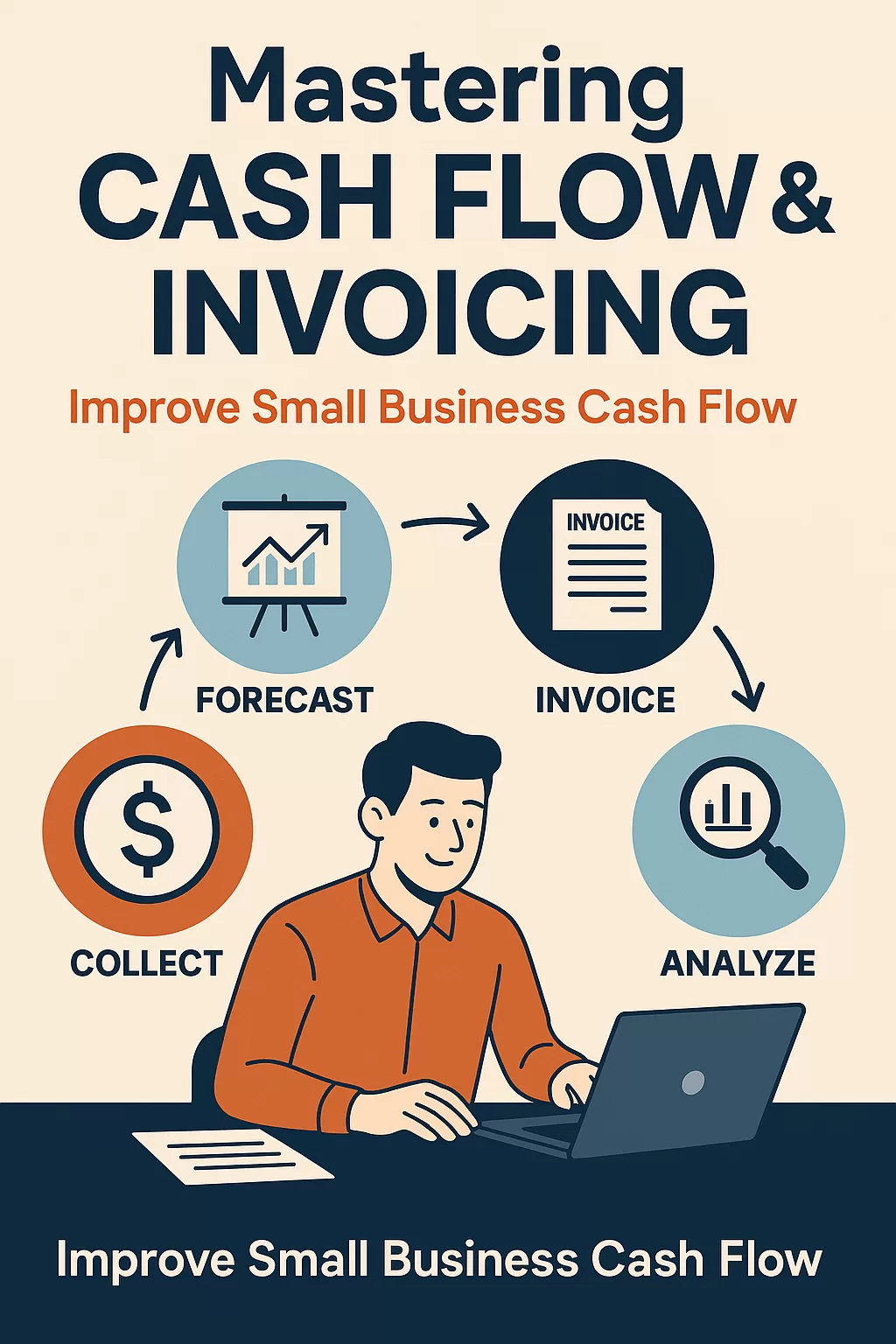
Mastering Cash Flow & Invoicing: Improve Small Business Cash Flow and Get Paid On Time
For many entrepreneurs and small business owners, the dream of independence and innovation often collides with a stark reality: the relentless pressure of cash flow. You’re not alone if you’ve felt the squeeze. We frequently hear sentiments like, “The biggest challenge was cash flow—to do any decent sized job you have to have tens of thousands in the bank,” and perhaps even more frustrating, “the most difficult thing … is getting paid at the end.” These aren’t just anecdotes; they’re the heartbeat of real small business struggles.
In the dynamic world of startups and growing ventures, cash isn’t just king—it’s oxygen. Without a steady, predictable flow of funds, even the most brilliant ideas can suffocate. This comprehensive guide is designed to empower you with the strategies, tools, and insights to master your cash flow, streamline your invoicing, and ensure timely payments, transforming your financial challenges into stepping stones for sustainable growth.
Ready to transform your financial operations? Dive in and discover how to gain control over your cash flow and invoicing process.
The Entrepreneur’s Constant Battle: Understanding Cash Flow Pain Points
Before we dive into solutions, let’s acknowledge the elephant in the room. Why is cash flow such a persistent headache for small businesses? It boils down to a few core issues:
- The Capital Crunch: Many businesses, especially service-based or project-heavy ones, require significant upfront investment in materials, payroll, or operational costs before any revenue comes in. As one entrepreneur put it, “to do any decent sized job you have to have tens of thousands in the bank.” This initial capital hurdle can be daunting and limits growth potential.
- The Payment Lag: You’ve delivered excellent work, but waiting 30, 60, or even 90 days to get paid can cripple your operations. This delay between earning revenue and actually receiving it is the notorious “cash flow gap.”
- Unpredictability: Inconsistent sales cycles, seasonal fluctuations, or unexpected expenses can throw even the best-laid financial plans into disarray.
- Lack of Visibility: Without clear insight into incoming and outgoing funds, it’s impossible to make informed decisions, leading to reactive rather than proactive management.
These challenges aren’t unique to your business. In fact, poor cash flow management is cited as a primary reason small businesses fail. But recognizing these pain points is the first step toward building a robust financial foundation.
Building a Solid Foundation: The Power of Proactive Cash Flow Management
Effective cash flow management isn’t just about reacting to shortages; it’s about anticipating them and building systems that ensure financial stability. It’s about ensuring you have enough liquidity to handle daily operations, weather unexpected disruptions, and invest in growth without relying too heavily on debt.
1. Cash Flow Forecasting: Your Financial Crystal Ball
One of the most powerful tools in your arsenal is a cash flow forecast. This isn’t just an accounting exercise; it’s a strategic planning tool that helps you predict how much cash will be available in the coming weeks or months, allowing you to avoid shortfalls and make proactive decisions.
How to Create and Utilize Cash Flow Forecasting Templates:
- Choose Your Horizon: Short-term forecasts (weekly or bi-weekly) are great for day-to-day liquidity management, while medium-term (13-week or monthly) and long-term (12-month) forecasts help with strategic planning and budgeting.
- Identify Inflows and Outflows: List all expected cash receipts (sales, loan disbursements) and payments (payroll, loan payments, supplier invoices).
- Start with Your Opening Balance: Each period’s forecast begins with the closing cash balance from the previous period.
- Estimate with Accuracy: Use historical data, confirmed orders, and realistic sales projections. Be conservative with inflows and liberal with outflows.
- Regularly Update: A forecast is a living document. Update it frequently— ideally weekly—to reflect real-time changes in your business. This consistency is key. For more on strategic financial planning, consider exploring the nuances of strategic debt as startup investment.
Many free templates are available online, or you can build a simple spreadsheet. The key is consistency and accuracy. By mapping out expected cash inflows and outflows, you gain visibility into what’s coming next and can make proactive rather than reactive decisions. For comprehensive financial oversight, also read our Small Business Bookkeeping & Payroll Guide 2025. You can also find more resources on managing your cash flow effectively at SBA.gov. For more detailed strategies on managing your business’s cash flow, explore resources like 5 Small Business Cash Flow Management Tips from LivePlan or review Cash Flow Management Tips for Your Business this 2025 from The Finance Weekly. You can also find valuable insights on 6 Ways to Manage Cash Flow in Your Small Business from SCORE and learn to Adapt your cash flow strategies for the current economy from UMB Blog.
2. Automate Invoicing and Embrace Recurring Billing
The pain of “getting paid at the end” can be significantly alleviated with smart invoicing practices. Manual invoicing is prone to errors and delays. Automation is your best friend here. According to a study by Paro, efficient cash flow management is crucial for small business survival.
Benefits of Automated Invoicing:
- Speed: Invoices are sent immediately upon completion of work or delivery, reducing the gap between service and billing.
- Accuracy: Reduces human error in calculations and data entry.
- Professionalism: Consistent, branded invoices enhance your business image.
- Reminders: Automated systems can send friendly (and then firmer) reminders for overdue payments, saving you time and awkward conversations.
The Power of Recurring Billing Tools:
If your business offers subscription services, retainers, or regular payments, recurring billing is a game-changer. These tools automatically charge clients at predetermined intervals, creating predictable revenue streams and significantly improving cash flow stability. This is crucial for businesses seeking a consistent inflow of funds. Many modern business bank accounts for startups also integrate seamlessly with these tools. To ensure your invoicing is as effective as possible, delve into comprehensive guides such as Invoicing Best Practices for Small Businesses by Toledo Bookkeeper Solutions, discover 9 Essential Invoicing Best Practices for Your Business from Ramp, or check out The Quick N’ Easy Guide (2025) on invoicing best practices from Bonsai.
Simplify Payroll & HR with Gusto
Take the complexity out of payroll, HR, and benefits with Gusto. Designed for modern businesses, Gusto makes it easy to pay your team, stay compliant, and manage all your HR needs in one intuitive platform.
- ✅ Easy Payroll in Minutes
- ✅ Automated Tax Filing & Compliance
- ✅ Health Benefits & 401(k) Administration
- ✅ Employee Onboarding & Management Tools
- ✅ Dedicated Support for Small Businesses
Join over 300,000 businesses trusting Gusto for their payroll and HR. For more insights on managing your team’s compensation and benefits, visit the Gusto Blog on Payroll.
3. Strategies for Efficient Collections: Nurturing Your Accounts Receivable
Even with automated invoicing, you still need a solid collection strategy. This is where you actively manage your accounts receivable (AR) to ensure timely payments. If you’re not being paid, or chronically receive late payments, it can weaken your cash flow—and ultimately your business. To further enhance your AR processes, explore resources like 8 Best Practices to Improve Your Accounts Receivable (AR) Management in 2025 from Upflow, get Accounts Receivable Simplified: Quick Tips For Busy Business Owners from Metrobi, consult the Accounts Receivable for Small Business Quick Guide from Invoiced, or review 4 Tips for Effectively Managing Small Business Accounts Receivable from EBizCharge.
Tips for Getting Paid On Time:
- Clear Payment Terms: State your payment terms (e.g., Net 30, Due upon receipt) clearly on all invoices and agree upon them upfront.
- Immediate Invoicing: Send invoices as soon as work is completed. Don’t wait!
- Offer Incentives: Consider a small discount for early payment (e.g., 2% if paid within 10 days).
- Multiple Payment Options: Make it easy for clients to pay you. Offer credit card, bank transfer, and online payment gateway options.
- Proactive Follow-ups: Don’t wait until an invoice is overdue. A friendly reminder email a few days before the due date can prevent late payments.
- Systematic Overdue Follow-up: Have a clear process for overdue invoices:
- Day 1-3 Overdue: Polite email reminder.
- Week 1 Overdue: Phone call (more personal).
- Week 2-3 Overdue: Firmer email/call, possibly discussing payment plans or consequences.
- Month 1+ Overdue: Consider collections agency or legal action (as a last resort).
- Build Strong Client Relationships: Good communication and strong relationships often translate to more respectful and timely payments. For more on this, check out our guide on Entrepreneurial Productivity Hacks.
Beyond the Basics: Advanced Strategies to Optimize Cash Flow
While forecasting and invoicing are foundational, a truly optimized cash flow strategy involves looking at all aspects of your financial operations. For a deeper understanding of fundamental business financial concepts, sites like NerdWallet offer great resources on cash flow management.
Expense Management & Cost Control
It’s not just about what comes in; it’s also about what goes out. Periodically review your business expenses. Categorize your spending to understand exactly where your money is going and identify discretionary expenses you can pause or reduce without impacting operations. Even modest cuts can free up cash for more urgent needs.
Inventory Optimization (If Applicable)
For product-based businesses, slow-moving inventory ties up cash. Monitor your inventory closely. If some of your inventory sells slowly, consider methods of maximizing the sale time or cutting down on any storage expenses.
Vendor Payment Optimization
Just as you want to get paid on time, you can also manage your own outgoing payments strategically. Prioritize matching inflows and outflows; for example, aim to issue vendor payments as close as possible to when you collect from customers for the same work. This improves your cash conversion cycle. For more on managing your payables, Investopedia provides a detailed explanation of Accounts Payable (AP).
Strategic Financing & Credit Lines
While the goal is to reduce reliance on debt, having access to a line of credit for emergencies or growth opportunities is a smart cash flow safety net. Explore financing options beyond traditional business loans to align your financing with your cash outflow. Learn more about the differences between business credit vs. business loans to make informed decisions. For startups looking to solidify their financial future, numerous resources offer in-depth guidance. Consider exploring a Startup Financial Planning: Guide and Templates from Kruze Consulting, learning how to create a Financial Plan For a Startup Business (That Actually Works) from Wise, or reviewing a founder’s guide to startup financial planning by Verified Metrics. Additional how-to guides like How to Create a Financial Plan For Small Businesses and Startups from Fyle and A Founder’s Guide from Bunker can also be invaluable.
Leverage Business Credit with Fund & Grow for 0% APR
Unlock significant 0% interest business credit lines, ranging from $50,000 to $250,000, for your startup or growing business. Fund & Grow specializes in optimizing your credit profile to secure maximum approvals for operational and growth expenses, which can be crucial for managing cash flow gaps.
- ✅ $50,000 – $250,000 in Credit Lines
- ✅ 0% Interest for 6-18 Months
- ✅ Boost Your Business Credit Score
- ✅ Expert Guidance & Support
Learn how to leverage this powerful funding strategy for your venture.
Leveraging Technology for Seamless Financial Operations
In today’s digital age, powerful tools can automate much of the heavy lifting involved in cash flow and invoicing. These aren’t just luxuries; they are necessities for efficiency and accuracy. While simple spreadsheets can work for many small businesses, you may want to consider tools with automated forecasting features once your needs become more complex.
- Accounting Software: Tools like Xero, QuickBooks, or FreshBooks integrate invoicing, expense tracking, and reporting, providing a holistic view of your financials.
- Invoicing & Billing Platforms: Standalone solutions or features within accounting software that specialize in automated invoicing, recurring billing, and payment reminders. Some even offer mobile apps for on-the-go invoicing.
- Payment Gateways: Integrate with Stripe, PayPal, Square, or other gateways to offer clients diverse and convenient payment methods.
- Cash Flow Forecasting Tools: Dedicated software or advanced spreadsheet templates that automate projections based on your historical data.
Level Up Your Startup Banking with Mercury
Ready for a business bank account that understands the pace of innovation? Mercury offers powerful financial tools, high FDIC insurance, and fee-friendly banking designed specifically for growing tech companies.
- ✅ No Monthly Fees or Minimum Balances
- ✅ Up to $5 Million FDIC Insurance
- ✅ Free Domestic & International USD Wires
- ✅ Seamless Integrations with Leading Accounting & Payroll Tools
- ✅ Advanced Expense Management & Corporate Cards
Join thousands of high-growth startups already trusting Mercury with their finances. You can explore more about their offerings and insights on their Mercury Blog.
Automate Your Accounting with Xero
Simplify your financial management with Xero, the cloud-based accounting software designed for small businesses. Manage invoicing, bank reconciliation, expense tracking, and more from anywhere.
- ✅ Easy-to-Use Interface
- ✅ Automated Bank Feeds
- ✅ Professional Invoicing & Recurring Billing
- ✅ Real-Time Financial Reporting
- ✅ Integrates with 1000+ Apps
Experience smarter accounting and better cash flow with Xero.
Expert Bookkeeping Services with Bench
Free up your time and gain clarity over your finances with Bench‘s professional bookkeeping services. Get dedicated bookkeepers, intuitive financial reports, and tax-ready books designed for small businesses.
- ✅ Monthly Bookkeeping Done For You
- ✅ Expert Bookkeepers
- ✅ Easy-to-Understand Financial Statements
- ✅ Tax-Ready Books at Year-End
- ✅ Integrations with Business Bank Accounts
Focus on growing your business while Bench handles your books. Find more helpful resources on their Bench Blog on Bookkeeping.
Comparison Table: Top Accounting & Invoicing Software for Small Businesses
| Feature/Software | Xero | QuickBooks Online | FreshBooks |
|---|---|---|---|
| Best For | Growing small businesses, international operations | Comprehensive features, robust integrations | Service-based businesses, freelancers |
| Automated Invoicing | ✅ Yes | ✅ Yes | ✅ Yes |
| Recurring Billing | ✅ Yes | ✅ Yes | ✅ Yes |
| Cash Flow Forecasting | Basic (with add-ons) | Advanced (with higher tiers) | Basic |
| Expense Tracking | ✅ Yes | ✅ Yes | ✅ Yes |
| Time Tracking | Add-on | Add-on | ✅ Built-in |
| Payroll Integration | ✅ Yes (through Gusto or others) | ✅ Yes (QuickBooks Payroll) | ✅ Yes (through Gusto or others) |
| Starting Price (approx.) | $15/month | $30/month | $17/month |
| Key Benefit | User-friendly, excellent for collaboration | Industry standard, wide range of features | Simplified invoicing & project management |

Conclusion: From Cash Flow Challenge to Financial Confidence
Mastering cash flow and invoicing is a continuous journey, not a one-time fix. By proactively forecasting, automating your billing, and implementing robust collection strategies, you can transform the “biggest challenge” into your greatest strength. It requires consistency, diligence, and the willingness to leverage modern tools.
Remember, a profitable business on paper can still struggle and even fail due to poor cash flow. Your goal isn’t just to make money, but to ensure that money flows efficiently through your business, enabling you to seize opportunities, pay your team, and ultimately, achieve the freedom and growth you envisioned.
Take control today. Implement these strategies, adopt the right tools, and turn your cash flow from a source of anxiety into a powerful engine for your entrepreneurial success.
Disclosure: Some of the links on this page are affiliate links. This means we may earn a commission at no extra cost to you if you make a purchase through one of our partners.
Frequently Asked Questions (FAQ) About Cash Flow & Invoicing
What is the most common reason small businesses fail due to cash flow?
The most common reason small businesses fail due to cash flow is poor cash flow management skills and a lack of understanding of cash flow, often coupled with insufficient initial capital. Businesses may show a profit on paper but lack the actual cash to cover daily operational expenses and unexpected costs.
How often should a small business forecast its cash flow?
For optimal control, a small business should ideally update its cash flow forecast weekly. This allows for continuous visibility into short-term liquidity and helps in making agile decisions. Monthly or quarterly forecasts are also essential for strategic planning.
What are the benefits of using automated invoicing for small businesses?
Automated invoicing significantly improves efficiency, reduces human error in billing, ensures invoices are sent immediately upon completion of work, and can automatically send payment reminders. This leads to faster payments, improved cash flow, and a more professional business image.
What are some effective strategies for collecting overdue payments?
Effective strategies include setting clear payment terms upfront, immediate invoicing, offering early payment incentives, providing multiple payment options, and implementing a systematic follow-up process that includes polite reminders, phone calls, and, if necessary, escalating communication or involving collections agencies for severely overdue accounts.
Can recurring billing tools help with cash flow stability?
Absolutely. Recurring billing tools automate charges for subscription services or regular retainers, creating predictable and consistent revenue streams. This significantly enhances cash flow stability, reduces administrative effort, and provides a clearer financial outlook for the business.