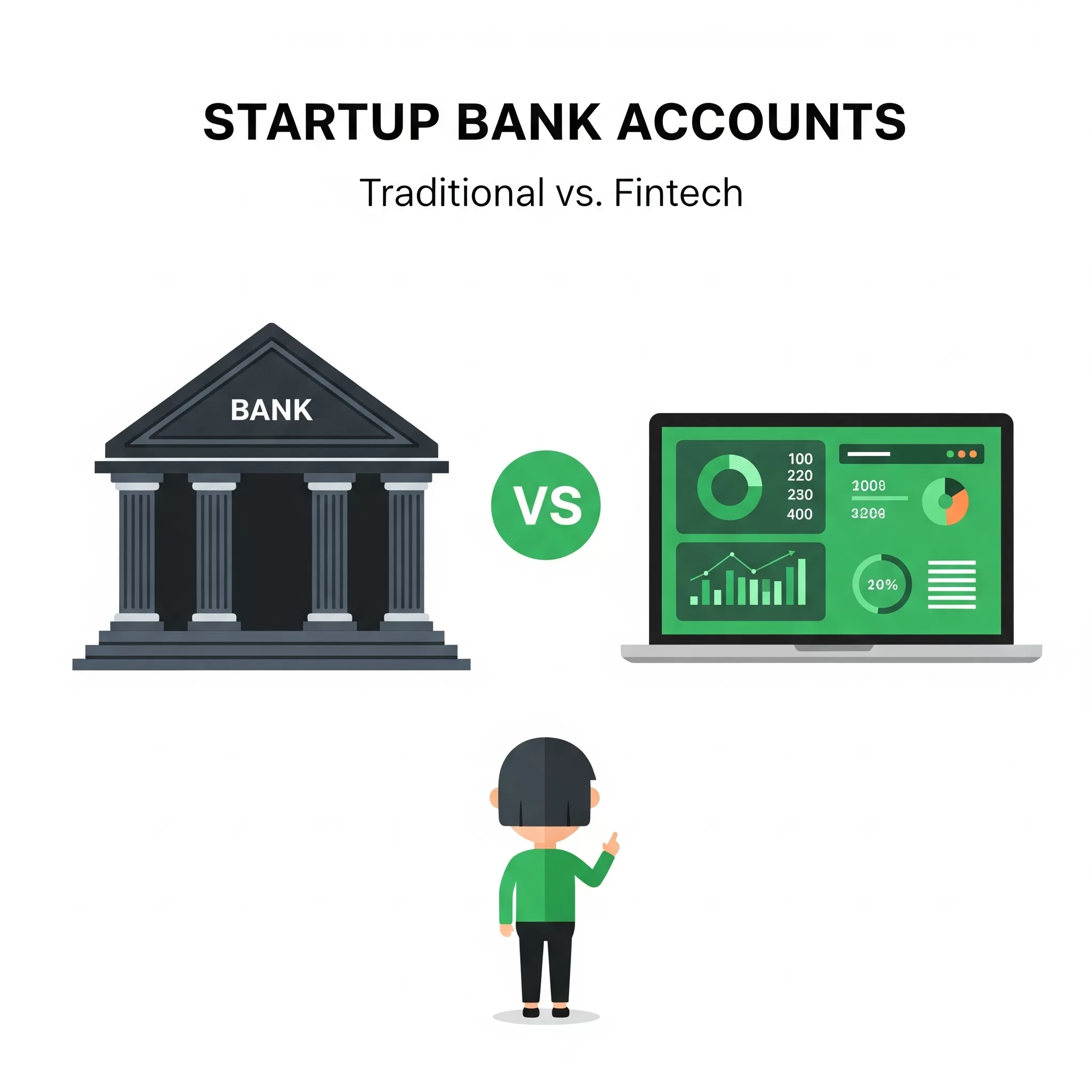
Best Business Bank Accounts for Startups: Traditional vs. Fintech Solutions 2025
Starting a business is thrilling, but choosing the right financial partner can feel overwhelming. Every startup needs a robust business bank account to manage finances, process payments, and track expenses. In 2025, you’re not just limited to traditional brick-and-mortar banks; a new wave of fintech for startups and online banking solutions offers unparalleled flexibility and specialized features. But how do you decide between the established reliability of a traditional bank and the innovative agility of a neobank like Mercury?
This comprehensive guide will break down the pros and cons of both options, highlight key features to look for, and help you determine the best business bank accounts for startups that align with your unique growth trajectory.
Ready to dive into the world of startup banking and find your perfect financial match? Let’s get started.
Disclosure: Some of the links on this page are affiliate links. This means we may earn a commission at no extra cost to you if you make a purchase through one of our partners.
Why a Dedicated Business Bank Account is Non-Negotiable for Startups
Before we explore your options, let’s address why a separate business bank account isn’t just a good idea, but a necessity. Many new entrepreneurs make the mistake of using personal accounts for business transactions, especially when starting as a sole proprietorship. While convenient initially, this approach can lead to significant headaches down the line.
Firstly, it creates a messy financial picture, making it incredibly difficult to track income and expenses accurately. This lack of clarity can turn tax season into a nightmare, increasing your risk of errors and potential audits. Secondly, co-mingling funds blurs the legal lines between your personal and business liabilities. If your business faces a lawsuit or financial distress, your personal assets could be at risk. This is particularly crucial if you’ve formed an entity like an LLC or Corporation, where personal liability protection is a primary benefit. A dedicated account reinforces this separation, safeguarding your personal wealth.
“Separating personal and business finances is fundamental to maintaining financial clarity, simplifying tax preparation, and protecting your personal assets from business liabilities.”
Beyond legal protection, a business account provides a professional image for your company. It enables you to accept various payment methods, build a business credit history, and streamline your bookkeeping and payroll processes. As your startup grows and potentially seeks business loans or investment, having clear, organized financial records is paramount. Lenders and investors scrutinize your financial health, and a well-managed business bank account is a foundational element of that. It’s an essential step in legitimizing your venture and setting it up for sustainable growth.
Traditional Banks: The Established Path for Startups
For decades, traditional banks were the only game in town for business banking. These are the household names with physical branches, ATMs, and a long history of serving businesses of all sizes. While the landscape has evolved, traditional banks still hold a significant place, especially for certain types of startups.

Pros of Traditional Banks for Startups:
- In-Person Service & Relationships: If you value face-to-face interactions, a local branch provides personalized support. You can build a relationship with a dedicated business banker who understands your local market and can offer tailored advice.
- Comprehensive Services: Traditional banks often provide a full suite of financial products under one roof: business checking, savings, lines of credit, term loans, mortgages, merchant services, and wealth management. This can be convenient for businesses that prefer a single financial institution for all their needs.
- Cash Handling: Businesses that deal extensively with cash deposits and withdrawals, such as retail stores or restaurants, often find traditional banks more convenient due to their physical infrastructure.
- Established Trust & Security: For many, the long-standing reputation and physical presence of a traditional bank instill a greater sense of security and trust. They are heavily regulated and typically offer strong fraud protection.
- SBA Loan Access: Many traditional banks are approved lenders for SBA loans, which can be crucial for startups seeking government-backed financing.
Cons of Traditional Banks for Startups:
- Higher Fees & Minimums: Traditional business accounts often come with monthly maintenance fees, transaction limits, and minimum balance requirements. Failing to meet these can incur additional charges, eating into a startup’s tight budget.[source]
- Slower Processes: Opening an account, applying for a loan, or resolving issues can often be a slower, more paperwork-intensive process compared to their fintech counterparts.
- Outdated Technology: While many traditional banks have improved their digital offerings, some still lag behind fintechs in terms of user-friendly online platforms, mobile apps, and seamless integrations with modern business tools.
- Less Specialized for Startups: Their offerings are broad, designed for all types of businesses. They may not offer the specific integrations or treasury management tools that high-growth tech startups often require.
- Limited Availability: If your team is remote or distributed, relying on physical branches can be impractical.
Fintech & Neobanks: The Agile Alternative for Modern Startups
Fintech (financial technology) companies and neobanks (digital-only banks) have revolutionized the banking industry, offering innovative solutions tailored to the needs of the digital-first entrepreneur. These platforms leverage technology to provide streamlined services, often with lower fees and more advanced features.
Pros of Fintech & Neobanks for Startups:
- Low or No Fees: Many fintech platforms offer free business checking accounts with no monthly fees, no minimum balance requirements, and free transactions (ACH, domestic wires). This is a huge advantage for cash-strapped startups.
- Speed & Convenience: Account opening is often quick and entirely online, taking minutes instead of days. Their digital-first approach means 24/7 access to your accounts and faster processing times.
- Advanced Technology & Integrations: Fintechs are built on modern tech stacks, offering intuitive mobile apps, robust online platforms, and seamless integrations with popular accounting software (like Xero and QuickBooks), payment processors, and expense management tools.
- Specialized Features for Growth: Many offer features specifically designed for high-growth startups, such as virtual cards, advanced expense controls, treasury management services, and even direct access to venture debt or SAFE investments.
- Global Capabilities: Often better equipped for international payments and multi-currency accounts, which is beneficial for globally-minded startups.
Cons of Fintech & Neobanks for Startups:
- No Physical Branches: While convenient for digital natives, the lack of physical branches can be a drawback for businesses that need to deposit cash frequently or prefer in-person support.
- Limited Scope of Services: Some fintechs might not offer the full range of traditional banking products like certain types of loans, mortgages, or complex wealth management services. You might need to use multiple providers for all your financial needs.
- Cash Deposit Limitations: Depositing physical cash can be cumbersome, often requiring third-party services or money orders.
- Newer Trust Factor: While regulated and FDIC-insured (usually through partner banks), some entrepreneurs may feel less secure with a newer, digital-only entity compared to a centuries-old institution.
Mercury: A Leading Fintech Solution for Modern Startups
When it comes to fintech for startups, Mercury stands out as a premier choice, especially for tech-enabled businesses and high-growth ventures. Mercury isn’t a bank itself; rather, it’s a financial technology company that provides banking services through its FDIC-insured partner banks (Choice Financial Group and Column N.A.). This allows them to combine the security of traditional banking with the agility and innovation of a tech company.

Key Features and Benefits of Mercury:
- Accounts Built for Tech: Mercury offers checking and savings accounts specifically designed for tech companies and startups.
- High FDIC Insurance: While standard FDIC insurance is $250,000 per depositor, Mercury offers up to $5 million in FDIC insurance through its sweep networks with multiple partner banks, providing enhanced security for larger balances.
- Fee-Friendly: Basic accounts come with no monthly fees, no minimum balance requirements, and free ACH payments. They also offer free domestic and international USD wire transfers, which can be a significant cost saving for businesses dealing with global payments.
- Advanced Financial Tools:
- Corporate Cards (IO Card): Get physical and virtual debit and credit cards with customizable spending limits and robust expense management tools.
- Mercury Treasury: For balances over $350,000, access low-risk, yield-earning mutual funds to put your idle cash to work.
- Venture Debt & SAFEs: Mercury offers unique financial products for qualified startups, including venture debt and Simple Agreement for Future Equity (SAFE) investments, bridging the gap between banking and startup funding.
- Bill Pay & Invoicing: Streamline accounts payable and receivable with integrated bill pay and invoicing features.
- Seamless Integrations: Mercury integrates seamlessly with popular accounting software like Xero and QuickBooks, as well as payroll services like Gusto, simplifying your financial operations. Its open API allows for custom automations and data flow.
- Superior Expense Management: Create virtual cards for specific vendors or team members, set granular spending limits, and automate receipt collection. This level of control is crucial for managing startup burn rates.
Level Up Your Startup Banking with Mercury
Ready for a business bank account that understands the pace of innovation? Mercury offers powerful financial tools, high FDIC insurance, and fee-friendly banking designed specifically for growing tech companies.
- ✅ No Monthly Fees or Minimum Balances
- ✅ Up to $5 Million FDIC Insurance
- ✅ Free Domestic & International USD Wires
- ✅ Seamless Integrations with Leading Accounting & Payroll Tools
- ✅ Advanced Expense Management & Corporate Cards
Join thousands of high-growth startups already trusting Mercury with their finances.
Traditional vs. Fintech: A Head-to-Head Comparison for Startups
To help you visualize the differences, here’s a comparison table highlighting key aspects of traditional banks versus fintech solutions for startups.
| Feature | Traditional Banks | Fintech / Neobanks (e.g., Mercury) |
|---|---|---|
| Fees & Minimums | Often higher monthly fees, transaction fees, minimum balance requirements. | Typically low or no monthly fees, fewer transaction fees, often no minimum balance. |
| FDIC Insurance | Standard $250,000 per depositor. | Standard $250,000 per depositor, often extended through sweep networks (e.g., Mercury offers up to $5M). |
| Account Opening | Often requires in-person visit or extensive paperwork; can take days. | Fully online, quick, and streamlined; can take minutes. |
| Cash Handling | Easy deposits and withdrawals via branches and ATMs. | Often limited or requires third-party services for cash deposits. |
| Technology & Integrations | Varies; some have outdated platforms. Integrations may be limited. | Modern, intuitive platforms with strong mobile apps and extensive integrations (accounting, payroll, APIs). |
| Customer Service | In-person, phone, online. Can be slower to resolve complex issues. | Primarily online (chat, email, phone). Often faster, more responsive digital support. |
| Loan Products | Full range of business loans, including SBA. Requires stricter eligibility. | May offer specialized funding (e.g., venture debt), but less common for traditional loans. |
| Specialized Tools | General business services. | Advanced expense management, virtual cards, treasury, venture financing connections. |
| Target Audience | Established businesses, those preferring in-person service, cash-heavy operations. | Digital-first startups, tech companies, remote teams, growth-focused ventures. |
Key Considerations When Choosing Your Startup’s Business Bank Account
Selecting the right business bank account isn’t a one-size-fits-all decision. Your choice should align with your startup’s specific needs, growth stage, and operational model. Here are the critical factors to evaluate:
- Fees and Minimums: For startups with tight budgets, minimizing fees is paramount. Look for accounts with no monthly maintenance fees, no transaction limits, and no minimum balance requirements. Overdraft fees and wire transfer costs can also add up.
- FDIC Insurance: Ensure your funds are protected. Standard FDIC insurance covers up to $250,000 per depositor. If your startup anticipates holding larger balances, consider providers like Mercury that offer extended FDIC coverage through sweep networks.
- Accessibility & Convenience: Do you need physical branches for cash deposits or in-person support? Or is a fully online, mobile-first experience sufficient for your remote or digital-native team? Consider how you’ll interact with your bank daily.
- Integrations with Business Tools: Seamless integration with your accounting software (like Xero or QuickBooks), payroll services (Gusto), and expense management platforms can save countless hours of manual data entry and reconciliation.
- Scalability & Growth Features: As your startup grows, will your banking partner be able to keep up? Look for features like corporate credit cards, advanced expense management, treasury services, and potential access to venture debt or other funding options. This is where platforms like Mercury truly shine.
- Customer Support: How responsive and helpful is their customer service? Do they offer 24/7 support via your preferred channels (chat, email, phone)? For startups, quick resolution of banking issues is crucial to avoid operational disruptions.
- Specific Industry Needs: Some industries (e.g., cannabis, crypto) have unique banking challenges. Ensure the bank you choose is comfortable and experienced working with your industry.
- Security Measures: Beyond FDIC insurance, assess the bank’s security protocols, including encryption, multi-factor authentication, and fraud prevention measures.
Streamlining Your Financial Operations: Beyond the Bank Account
Opening the right business bank account is just the first step in building a strong financial foundation for your startup. To truly thrive, you need to integrate your banking with other essential financial tools and strategies. This holistic approach ensures efficiency, accuracy, and compliance as you scale.
Accounting & Bookkeeping
Accurate and timely accounting is non-negotiable. Connecting your business bank account directly to robust accounting software like Xero or QuickBooks automates reconciliation and provides a real-time snapshot of your financial health. This visibility is vital for making informed decisions, managing cash flow, and preparing for tax season. For many startups, outsourcing this function to a professional service like Bench.co can be a smart move, freeing up valuable time.
Payroll Management
As you hire, a reliable payroll system becomes essential. Solutions like Gusto integrate seamlessly with your bank account, automating salary payments, tax withholdings, and compliance. This minimizes errors and ensures your team is paid accurately and on time. If you’re exploring payroll loans or need quick capital for salaries, efficient payroll records are often a prerequisite.
Expense Management & Corporate Cards
Managing business expenses efficiently is key to controlling your burn rate. Many modern banking platforms, like Mercury, offer integrated expense management tools and corporate cards. These allow you to issue virtual cards, set spending limits, and automate receipt collection, giving you granular control over every dollar spent. This level of oversight is far superior to trying to track expenses across multiple personal credit cards or spreadsheets. For a deeper dive into managing business spending, explore the differences between business credit vs. business loans.
Building Business Credit
From day one, focus on building business credit. This separate credit profile for your company is crucial for securing better loan terms, higher credit limits, and establishing your business as a distinct entity. A dedicated business bank account is the foundation for this, allowing you to establish a payment history and apply for business credit cards. Tools like Fundwise and Fund & Grow can also assist in navigating the process of building business credit and securing unsecured funding, even with less-than-perfect personal credit.
Frequently Asked Questions About Business Bank Accounts for Startups
What is the difference between a traditional bank and a neobank?
A traditional bank operates with physical branches, a long history, and a wide range of services. They often have more complex fee structures and slower processes. A neobank (or fintech) is an entirely digital bank, operating online or through mobile apps, often with lower fees, faster processes, and advanced technological integrations. Neobanks like Mercury partner with traditional banks to provide FDIC-insured services.
Is my money safe with a fintech company like Mercury?
Yes, reputable fintech companies like Mercury prioritize security. While Mercury itself is a financial technology company and not a bank, it provides banking services through its partner banks (e.g., Choice Financial Group, Column N.A.), which are members of the FDIC. This means your deposits are FDIC-insured up to the maximum legal limit ($250,000 per depositor, and Mercury can extend this to $5 million through sweep networks across multiple partner banks). Always verify the FDIC insurance status of any financial institution you choose.
When should a startup open a business bank account?
You should open a dedicated business bank account as soon as your business starts generating income or incurring expenses, ideally even before your first transaction. This ensures proper separation of personal and business finances, simplifies bookkeeping, and is crucial for legal and tax compliance, especially if you’ve formed an LLC, S-Corp, or C-Corp.
Can I get a business loan from a fintech company?
While many fintechs primarily focus on banking services, some, like Mercury, offer specialized funding options such as venture debt or connections to investors through SAFEs. For traditional term loans or lines of credit, traditional banks or specialized lenders like National Funding are typically the primary sources. If you’re seeking fast access to capital, check out options for fast business loans with minimal paperwork.
Do I need a strong credit score to open a business bank account?
Generally, no. Most business checking accounts don’t require a strong personal or business credit score to open. However, if you plan to apply for credit products like a business credit card or a line of credit through the same institution, your credit history will be a factor. Maintaining a healthy Fundwise credit score is always beneficial for future funding needs.
How do I choose the right business bank account for my specific startup?
Consider your business model, transaction volume, need for cash deposits, desired integrations, and future growth plans. If you’re a tech-enabled, high-growth startup with remote operations and a need for advanced financial tools, a fintech like Mercury might be ideal. If you require frequent cash deposits or prefer in-person service, a traditional bank might be a better fit. Always compare fees, features, and customer support.
Final Thoughts: Powering Your Startup’s Financial Future
Choosing the best business bank account for your startup is a pivotal decision that impacts everything from daily operations to long-term growth. Whether you lean towards the established presence of a traditional bank or the innovative agility of a fintech solution like Mercury, the key is to select a partner that aligns with your specific needs.
For modern, growth-focused startups, especially those in the tech sector, Mercury offers a compelling package of features, integrations, and scalability that few traditional banks can match. Its fee-friendly structure, high FDIC insurance, and advanced tools for expense management and treasury make it an invaluable asset for navigating the complexities of startup finance.
Ready to Build Your Startup’s Financial Foundation?
Don’t let banking complexities hold your startup back. Explore Mercury today for a modern, founder-friendly banking experience that scales with your ambition. Unlock powerful tools, streamline your finances, and focus on what you do best: growing your business.
Or, discover more business funding tools and capital strategies to fuel your growth.
Disclosure: Some of the links on this page are affiliate links. This means we may earn a commission at no extra cost to you if you make a purchase through one of our partners.