108 Ways to Fund Your Startup or Small Business (Ultimate List)
Need capital to start, scale, or stabilize your business? This in‑depth guide covers over 100 legitimate funding strategies—from traditional loans and grants to creative financing and equity options designed for U.S. founders and entrepreneurs.
This post contains affiliate links. We may earn a commission when you click them. Learn more.
Bootstrapping & Personal Funding
-
1. Personal savings
Tap your own reserves to maintain full control. Learn more about the Pros and Cons of Self-Funding a Startup.
-
2. Friends & Family Loans
Borrowing from your close network can provide flexible terms and lower interest rates than traditional lenders. Always formalize these agreements with clear repayment terms to protect relationships. Explore a Guide to Friends and Family Financing.
-
3. Home Equity Line of Credit (HELOC)
A HELOC allows you to borrow against the equity in your home at potentially lower interest rates than unsecured loans. Use this option cautiously, as your home serves as collateral. Understand more about Using Home Equity for Business.
-
4. Personal Credit Cards (0% Intro APR)
Utilize personal credit cards with introductory 0% APR periods for short-term working capital needs. It’s crucial to have a clear repayment plan before the promotional period ends to avoid high interest.
-
5. Side Hustle Income
Generate additional income through freelance work or other ventures to consistently funnel capital into your growing business. This method allows you to bootstrap without fully depleting personal savings.
-
6. Rollover for Business Startups (ROBS)
Access your retirement funds (401k, IRA) to finance your business without incurring early withdrawal penalties or taxes. This strategy allows you to invest significantly in your venture while maintaining retirement plan benefits. Guidant Financial explains how this non-debt, non-equity option works.
-
7. Personal Loans
Obtain an unsecured loan based on your personal creditworthiness. These loans typically have fixed interest rates and repayment schedules, providing predictable funding for various business needs. See a comparison of Business Loans vs. Personal Loans.
-
8. Refinance Personal Assets
Utilize the equity in personal assets, such as vehicles or investments, to secure a loan. This can provide a lump sum of capital, but remember the risks associated with collateralizing personal property.
-
9. Credit Card Balance Transfers
Transfer existing high-interest personal credit card debt to a new card with a 0% introductory APR. This can free up cash flow that can then be directed towards business expenses. Learn about Business Balance Transfer Credit Cards.
-
10. Selling Personal Assets
Liquidate non-essential personal belongings or investments to generate immediate cash. This approach provides capital quickly without debt, but it’s a one-time funding source.
-
11. Lifestyle Bootstrapping
Adopt a frugal personal lifestyle to minimize expenses, allowing you to dedicate a larger portion of your income directly to your business. This extends your runway and reduces immediate funding needs. Read about The Art of Bootstrapping.
-
12. Credit Card Rewards/Cash Back
Strategically use personal credit cards that offer generous cash back or rewards points, which can then be redeemed to offset business expenses or provide a small cash infusion. Understand more about Using a Credit Card for Business Expenses.
Grants & Free Money
-
13. SBIR Grants (Small Business Innovation Research)
These are highly competitive federal grants for small businesses engaged in research and development (R&D) with commercial potential. They are non-dilutive, meaning you retain full ownership. Learn more about SBIR and STTR Grants.
-
14. STTR Grants (Small Business Technology Transfer)
Similar to SBIR, STTR grants also fund R&D but require a formal collaboration between a small business and a research institution. This encourages technology transfer from academia to the private sector. Discover more with this overview of STTR Grants.
-
15. Grants.gov
This is the central online hub for all federal grant opportunities across various agencies. It’s an essential resource for identifying and applying for government funding that aligns with your business’s mission. You can find useful tips in this Complete Guide to Small Business Grants.
-
16. Amber Grant
WomensNet offers the monthly Amber Grant for women entrepreneurs, providing $10,000 for various business needs. They also offer additional grants throughout the year for specific categories. Get insights on What Winning WomensNet Grant Applications Have in Common.
-
17. Hello Alice Grants
Hello Alice frequently offers rotating industry-specific grants and partnerships with major corporations to support diverse small businesses. Their platform also provides resources and mentorship. Check current grants.
-
18. FedEx Small Business Grant Contest
Participate in this annual national competition to win grants up to $50,000, plus business services. It’s a highly sought-after grant for businesses with compelling stories and growth potential. Apply.
-
19. NASE Micro-Grants
The National Association for the Self-Employed (NASE) provides grants of up to $4,000 for self-employed individuals and small businesses to support specific growth initiatives. Membership is required to apply. Learn more.
-
20. Local Chamber of Commerce Grants
Many local chambers of commerce offer regional grant programs funded by local governments or corporate sponsors, often targeting businesses that contribute to local economic development. Find out more in this guide to Small Business Grants.
-
21. State Economic Development Grants
Explore grant opportunities provided by your state’s economic development agencies, which aim to foster job creation and innovation within the state. These grants often have specific criteria related to industry or location. Consult a Complete Guide to Small Business Grants for more information.
-
22. Veteran Grant Programs
Numerous grants are available specifically for veteran-owned businesses, offered by the SBA, Department of Veterans Affairs, and various nonprofit organizations dedicated to supporting veteran entrepreneurship. Read a Veteran’s Guide to Launching Your Own Venture.
-
23. MBDA Grants (Minority Business Development Agency)
The MBDA provides grants and funding opportunities to promote the growth and competitiveness of minority-owned businesses. Their programs often include business training and technical assistance. Learn more about the MBDA Grants Process.
-
24. Women’s Business Centers (WBC)
These SBA-backed centers offer resources, training, and information on funding opportunities tailored for women entrepreneurs, including access to local and national grant programs. Find resources for Women-Owned Businesses on SBA.gov.
-
25. LGBTQ+ Business Grants
Organizations like the National LGBT Chamber of Commerce (NGLCC) offer grant opportunities for certified LGBTQ+ owned businesses, fostering diversity and inclusion in the business community. Explore grants via NGLCC.org.
-
26. LegalZoom & NBA Fast Break Grants
This program offers grants and valuable legal support to small businesses, often focusing on specific industries or demographics. It’s a unique opportunity combining financial and legal assistance. Find out more about the Fast Break for Small Business Program.
-
27. GoFundMe Grants
While primarily a crowdfunding platform, GoFundMe sometimes partners with organizations or offers matching grants for campaigns that meet certain criteria, particularly those with a social impact. Review GoFundMe’s Small Business Relief Initiative FAQs.
-
28. Corporate Social Responsibility (CSR) Grants
Many large corporations offer grants as part of their CSR initiatives, supporting businesses that align with their social or environmental goals. Research companies in your industry for potential matches. Discover Why Startup Grants Deserve a Place in Your Funding Strategy.
-
29. Foundation Grants
Private foundations often have specific philanthropic missions and offer grants to businesses or nonprofits that address those areas. Use databases like Foundation Directory Online to find relevant opportunities. Explore Small Business Grants available this July.
-
30. Arts & Culture Grants
If your business operates in the arts, cultural, or creative industries, look for grants from national, state, and local arts councils or cultural organizations that support artistic innovation and community engagement. Learn how to Find Arts and Culture Grants.
-
31. Environmental & Green Business Grants
Grants are available for businesses focused on sustainability, renewable energy, and eco-friendly products or services, often funded by government agencies or environmental foundations.
-
32. Technology & Innovation Grants
Various grants target tech startups and innovative businesses, particularly those developing groundbreaking technologies or contributing to scientific advancement, often from federal agencies or tech-focused foundations.
-
33. Rural Development Grants
Businesses located in rural areas may qualify for grants from the USDA or other agencies aimed at promoting economic growth and job creation in underserved communities.
-
34. Disabled Veteran Business Grants
In addition to general veteran grants, specific programs and grants exist for businesses owned by disabled veterans, providing targeted support for their unique challenges and contributions.
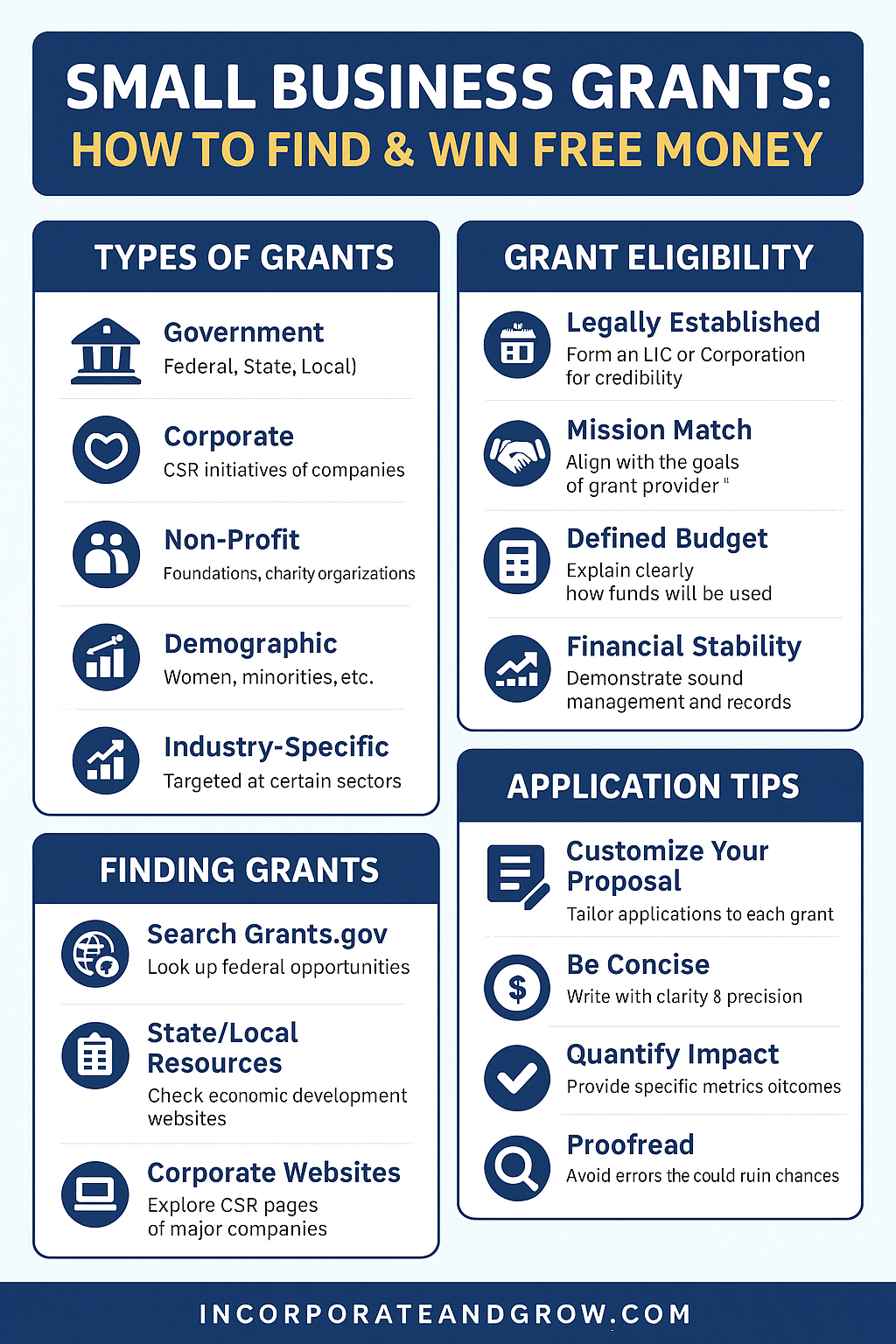
For a comprehensive guide on navigating the world of grants, see our Small Business Grants Guide.
Unsecured Business Credit
-
35. Fund & Grow
Access substantial 0% interest business credit lines, ranging from $50,000 to $250,000, ideal for growth and operational expenses. Their program helps optimize your credit profile for maximum approval. Start here. Learn how via our building credit guide.
Access 0% Business Credit Lines with Fund & Grow
Unlock significant 0% interest business credit lines, ranging from $50,000 to $250,000, for your startup or growing business. Fund & Grow specializes in optimizing your credit profile to secure maximum approvals for operational and growth expenses.
- ✅ $50,000 – $250,000 in Credit Lines
- ✅ 0% Interest for 6-18 Months
- ✅ Boost Your Business Credit Score
- ✅ Expert Guidance & Support
- ✅ Ideal for Startups & Small Businesses
Learn how to leverage this powerful funding strategy for your venture.
-
36. Fundwise Capital
Prequalify quickly for up to $150,000 in unsecured business funding, often with minimal paperwork. Fundwise specializes in helping businesses secure capital based on a blend of personal and business credit. Apply now. Learn about Fundwise credit score requirements.
Prequalify for Unsecured Funding with Fundwise Capital
Get quick access to unsecured business funding without the hassle. Fundwise Capital helps you prequalify for up to $150,000 in capital based on a blend of your personal and business credit, making funding simpler and faster.
- ✅ Prequalify in Minutes
- ✅ Up to $150,000 in Unsecured Funding
- ✅ No Collateral Required for Unsecured Options
- ✅ Streamlined Application Process
- ✅ Solutions for Various Business Stages
See how much funding your business can get prequalified for today!
-
37. Mercury IO Card + Account
Benefit from a no-credit-check startup banking solution paired with a corporate credit card designed for scaling businesses. Mercury provides robust financial tools without traditional credit hurdles. Open Mercury. Find out why it’s one of the best business bank accounts for startups.
Level Up Your Startup Banking with Mercury
Ready for a business bank account that understands the pace of innovation? Mercury offers powerful financial tools, high FDIC insurance, and fee-friendly banking designed specifically for growing tech companies.
- ✅ No Monthly Fees or Minimum Balances
- ✅ Up to $5 Million FDIC Insurance
- ✅ Free Domestic & International USD Wires
- ✅ Seamless Integrations with Leading Accounting & Payroll Tools
- ✅ Advanced Expense Management & Corporate Cards
Join thousands of high-growth startups already trusting Mercury with their finances.
-
38. Gusto Payroll Loans
Businesses using Gusto for payroll can access loans directly through the platform, streamlining funding for payroll needs based on your consistent payment history. Check eligibility. Learn more in our payroll guide.
-
39. Xero Small Business Loans
Explore loan options integrated directly with Xero accounting software, offering seamless application processes for businesses that manage their finances through the platform. Explore now.
-
40. Amex 0% Business Cards
Leverage the flexibility of American Express business credit cards with introductory 0% APR offers. These cards provide substantial spending power and grace periods for new purchases. Amex offer.
Maximize Rewards with Amex Business Cards
Unlock powerful spending potential and earn valuable rewards with an American Express Business Card. Benefit from introductory 0% APR offers, robust spending power, and features designed for business growth.
- ✅ Generous Welcome Offers
- ✅ Flexible Rewards on Business Spending
- ✅ No Annual Fee Options Available
- ✅ Tools for Expense Management
- ✅ Access to Amex Business Resources
Discover the Amex Business Card that’s right for your company’s financial needs.
-
41. Chase Ink Business Cards
Popular for their strong rewards programs and often generous introductory offers, Chase Ink cards can provide significant purchasing power and cash back for business expenses.
-
42. Capital One Spark Business Cards
Known for straightforward rewards and easy approval processes, Capital One Spark cards are a solid option for building business credit and managing daily expenditures.
-
43. Divvy Corporate Cards
A corporate card and expense management platform that offers credit lines based on cash flow rather than personal credit, ideal for growing startups seeking to streamline spending. Learn more.
-
44. Brex Corporate Cards
Designed for startups and scaling businesses, Brex offers corporate cards with higher limits based on cash in your bank account, often without personal guarantees. Explore Brex.
-
45. Vendor Trade Lines
Establish credit accounts directly with your suppliers. Paying these accounts on time builds positive payment history, which can then be reported to business credit bureaus, strengthening your business credit profile.
-
46. Business Credit Builder Programs
Enroll in programs specifically designed to help businesses establish and improve their credit scores through structured credit lines and reporting to major bureaus. This is crucial for long-term funding access.
-
47. Secured Business Credit Cards
For businesses with limited or poor credit, a secured business credit card requires a cash deposit as collateral but allows you to build credit history. It’s a stepping stone to unsecured options.
-
48. Net-30 Vendor Accounts
Obtain accounts with suppliers that offer 30-day payment terms without requiring immediate cash. Timely payments on these accounts contribute positively to your business credit file.
SBA & Bank Loans
SBA-Backed Loans
-
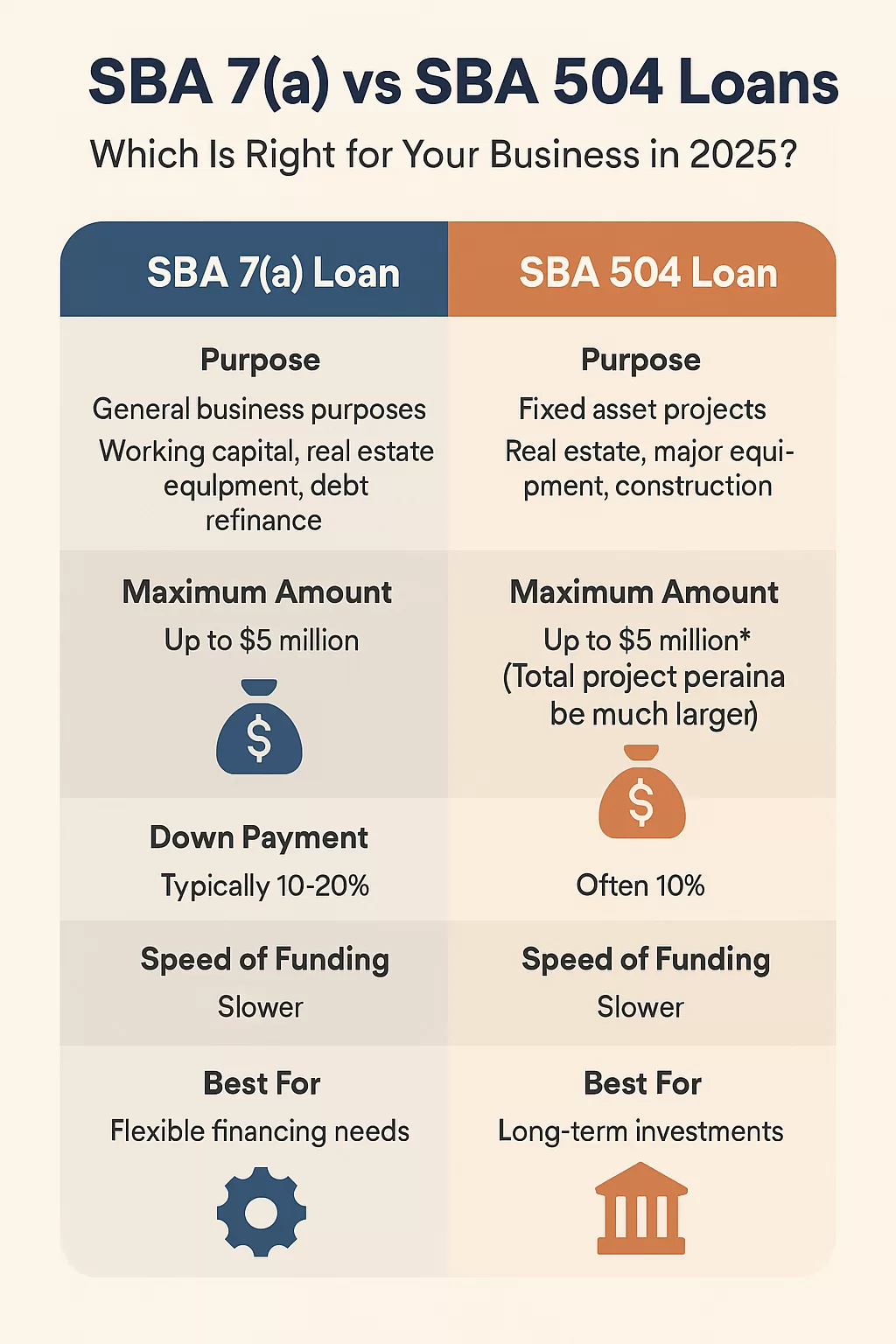
49. SBA 7(a) Loans
The most flexible and common SBA loan, providing up to $5 million for working capital, equipment, real estate, or business acquisition. These loans have favorable terms and government guarantees. Check our checklist and learn more at SBA.gov.
-
50. SBA 504 Loans
Specifically designed for major fixed assets like real estate or equipment, offering long-term, fixed-rate financing through Certified Development Companies (CDCs). Compare SBA 7(a) vs 504 to see which is right for you.
-
51. SBA Microloans
Smaller loans, typically less than $50,000, provided through non-profit community-based lenders. These are ideal for startups and small businesses needing modest capital for various purposes.
-
52. SBA Express Loans
Offers faster approval times for loans up to $500,000, making them a quicker option than standard 7(a) loans. These are useful when you need expedited access to funds.
-
53. SBA Disaster Loans
Provides low-interest loans to businesses, homeowners, and renters in declared disaster areas. These loans help cover damages and provide working capital during recovery. SBA Disaster Assistance.
-
54. Community Advantage Loans
A pilot program under the SBA 7(a) designed to provide smaller loans (up to $250,000) to underserved communities, often through mission-based lenders.
-
55. Export Express Loans
SBA loans specifically for businesses that need financing to develop or expand export activities, offering streamlined application processes for export-related working capital or equipment.
-
56. Patriot Express Loans (No Longer Active, but Historical Context)
While no longer active, this program historically offered expedited SBA loan processing for veterans and their spouses. It’s a reminder of past programs supporting specific demographics.
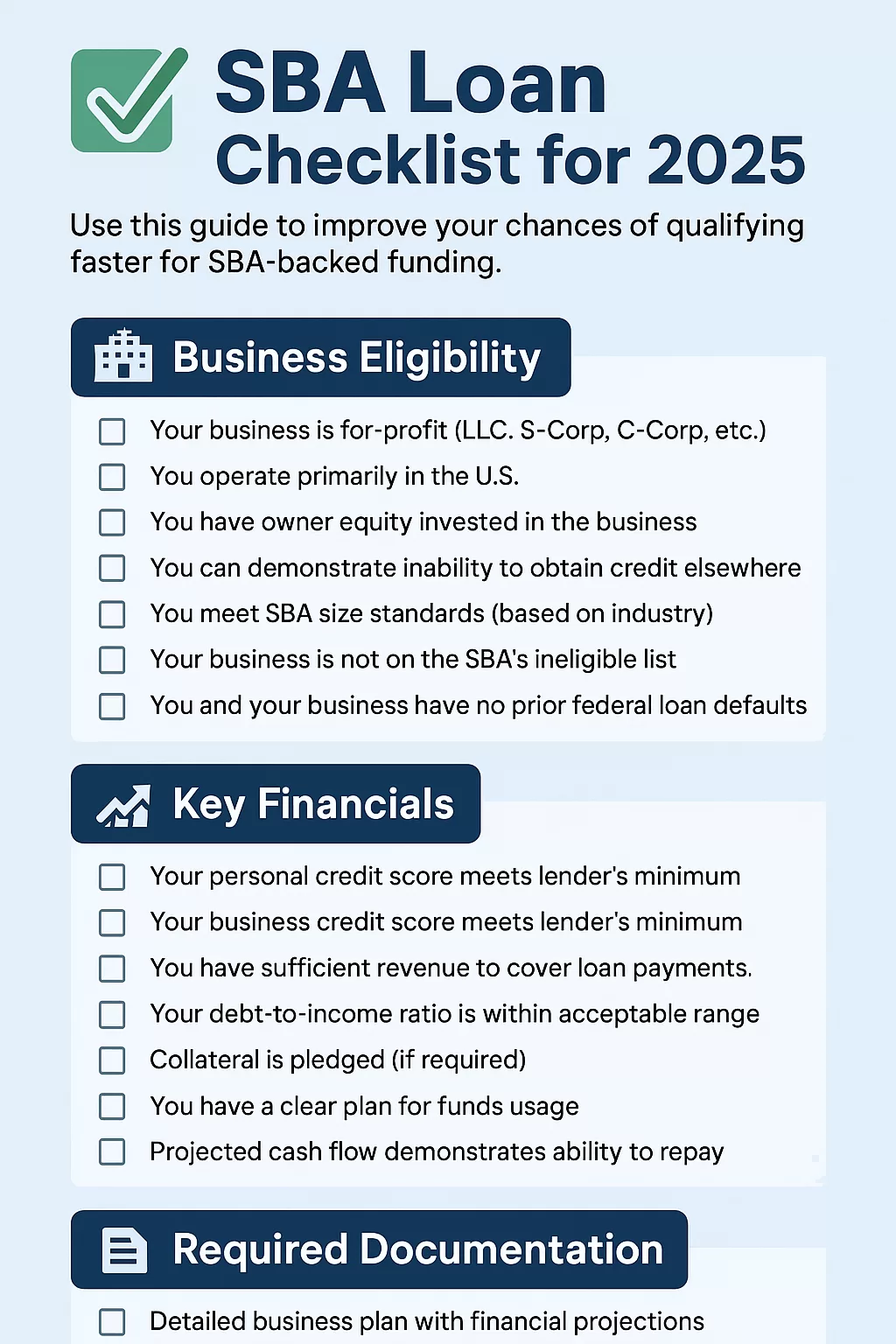
For more details on preparing your application, consult our SBA Loan Checklist 2025.
Traditional Bank Loans
-
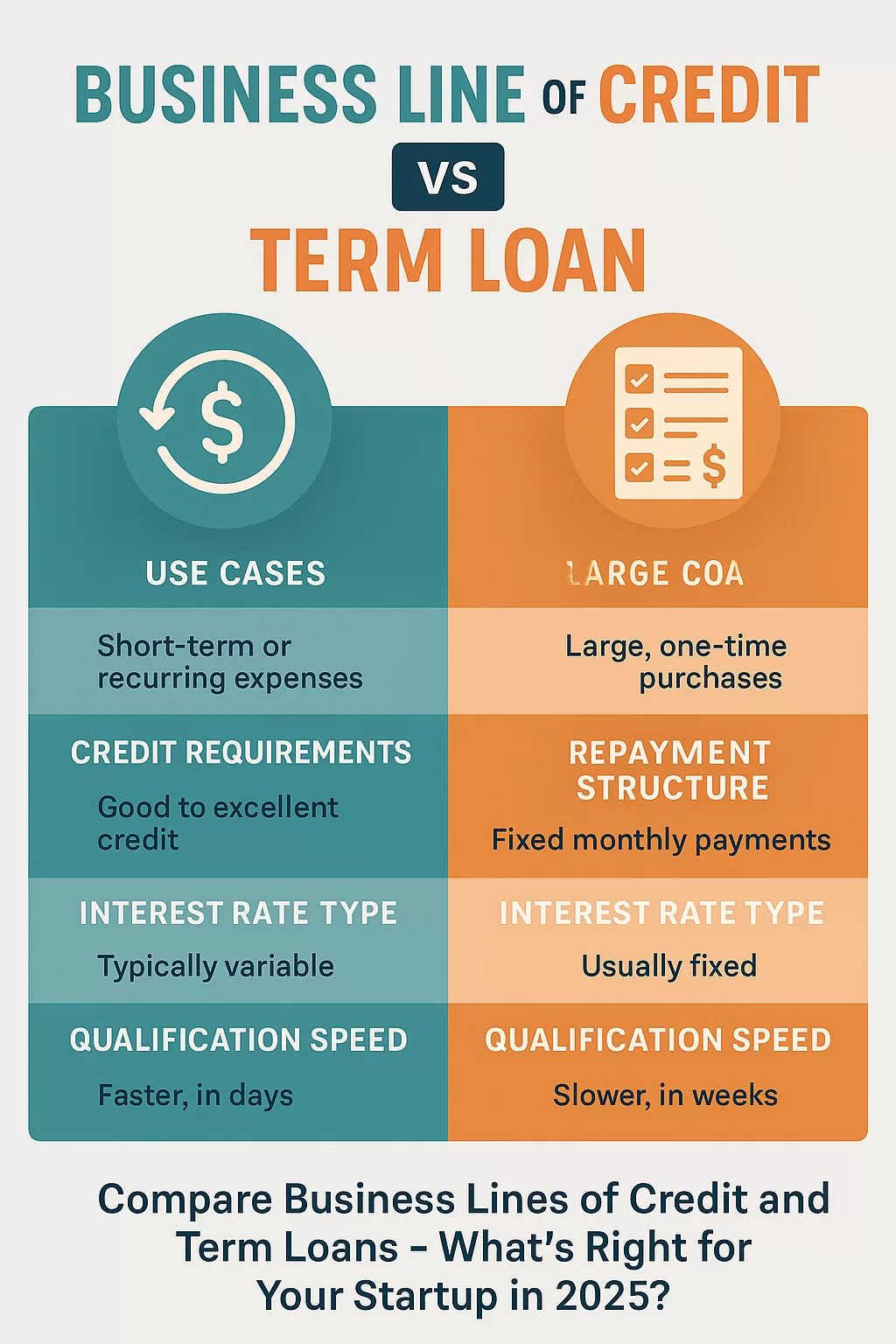
57. Term Loans
Fixed-rate financing with a set repayment schedule, ideal for specific growth needs like expanding operations or large equipment purchases. They offer predictable monthly payments and clear terms.
-
58. Lines of Credit
Provides flexible access to capital up to a certain limit, allowing you to draw and repay as needed. This is excellent for managing cash flow fluctuations or covering unexpected expenses. See our line vs term loan guide for a detailed comparison.
-
59. Commercial Mortgages
Long-term loans specifically for purchasing, renovating, or refinancing commercial real estate. These are typically offered by banks and credit unions with competitive rates.
-
60. Startup Business Loans
Some traditional banks offer specific loan products tailored for new businesses, often requiring a strong business plan, good personal credit, and sometimes a personal guarantee. See our best business loans for startups guide.
-
61. Working Capital Loans
Short-term loans designed to cover day-to-day operational expenses like payroll, inventory, or rent. They help maintain liquidity during periods of slower cash flow.
Get Fast Business Funding with National Funding
Need capital quickly? National Funding specializes in providing fast, flexible business loans and merchant cash advances, even with minimal paperwork. Get the funds you need to seize opportunities and grow your business.
- ✅ Funding in as Fast as 24 Hours
- ✅ Flexible Repayment Options
- ✅ Solutions for Various Credit Profiles
- ✅ Dedicated Business Funding Specialists
- ✅ Focus on Small to Medium-Sized Businesses
Apply today and get pre-qualified for the capital your business needs to thrive.
-
62. Bridge Loans
Short-term financing used to “bridge” a gap until longer-term financing or a specific event (like an acquisition or a large contract payment) materializes. These are often quicker to obtain.
-
63. Construction Loans
Financing specifically for building or renovating commercial properties, typically disbursed in stages as construction milestones are met. These convert to a permanent mortgage upon completion.
-
64. Secured Bank Loans
Loans requiring collateral, such as real estate, equipment, or inventory. These often come with lower interest rates due to reduced risk for the lender. Check our loan approval checklist.
-
65. Unsecured Bank Loans
Loans not backed by collateral, making them riskier for lenders and thus often requiring excellent credit or a strong business history. They rely on your creditworthiness and cash flow.
Credit Union Loans
-
66. Credit Union Business Loans
Often offer more favorable rates and terms compared to traditional banks due to their member-focused structure. Credit unions tend to be more community-oriented and flexible with eligibility for small businesses. NerdWallet explains Credit Union loans.
-
67. Member-Specific Loans
Some credit unions offer special loan programs or discounts for members who have an established relationship or meet specific criteria.
Alternative Asset-Based Loans
-
68. Equipment Financing
Acquire new or used equipment by using the equipment itself as collateral for the loan. This allows businesses to invest in necessary assets without tying up other capital. Explore fast loan options for equipment.
-
69. Invoice Factoring (Accounts Receivable Financing)
Sell your outstanding invoices to a third party (factor) for immediate cash flow, typically receiving 80-95% of the invoice value upfront. The factor then collects from your customers. Investopedia on Invoice Factoring.
-
70. Merchant Cash Advance (MCA)
Receive an upfront lump sum in exchange for a percentage of your future credit card sales. Repayment is often daily or weekly, directly from your sales. Apply now via National Funding.
Get Fast Business Funding with National Funding
Need capital quickly? National Funding specializes in providing fast, flexible business loans and merchant cash advances, even with minimal paperwork. Get the funds you need to seize opportunities and grow your business.
- ✅ Funding in as Fast as 24 Hours
- ✅ Flexible Repayment Options
- ✅ Solutions for Various Credit Profiles
- ✅ Dedicated Business Funding Specialists
- ✅ Focus on Small to Medium-Sized Businesses
Apply today and get pre-qualified for the capital your business needs to thrive.
-
71. Inventory Financing
Use your existing inventory as collateral to secure a loan. This type of financing is common for retail and manufacturing businesses that need capital to purchase more stock or manage seasonal fluctuations.
-
72. Purchase Order (PO) Financing
Receive funding to pay your suppliers for goods you’ve pre-sold to a customer, based on a confirmed purchase order. This helps fulfill large orders when you lack upfront capital.
-
73. Real Estate Collateral Loans
If you own commercial or investment real estate, you can use it as collateral for a business loan, often securing larger amounts and more favorable terms than unsecured options.
-
74. Securities-Backed Lines of Credit (SBLOC)
Borrow against your investment portfolio without selling off assets. The loan amount is typically a percentage of your portfolio’s value, offering flexible access to capital.
-
75. Hard Money Loans
Short-term, asset-based loans from private lenders, often used for real estate development or quick flips. They have higher interest rates but faster approval processes and less stringent credit requirements.
Crowdfunding & Investors
-
76. Equity Crowdfunding
Raise capital by selling small equity stakes to a large number of investors through platforms like StartEngine or Wefunder. This democratizes investment, allowing individuals to become shareholders. Learn about equity crowdfunding vs. traditional fundraising.
Fund Your Vision with Wefunder Crowdfunding
Raise capital from your community and beyond through Wefunder. Whether you’re a startup or an established business, Wefunder makes it possible to connect with thousands of everyday investors who believe in your mission.
- ✅ Invest in Your Community
- ✅ Raise Capital Directly from Fans & Customers
- ✅ Simple Campaign Setup
- ✅ Access to Investor Network
- ✅ Build a Loyal Following
Start building your investor base and secure the funding you need.
Launch Your Equity Crowdfunding Campaign with StartEngine
Democratize your fundraising and raise capital by offering equity to a community of investors. StartEngine makes it simple for startups and growing businesses to connect with a large base of potential shareholders.
- ✅ Raise Capital from Everyday Investors
- ✅ Streamlined Campaign Creation
- ✅ Access to a Large Investor Network
- ✅ Retain More Control Than Traditional VC
- ✅ Build a Community of Brand Advocates
Ignite your growth story and connect with thousands of investors.
-
77. Rewards Crowdfunding
Offer pre-orders, unique perks, or exclusive products to backers in exchange for their financial contributions. Popular on platforms like Kickstarter and Indiegogo, this is great for product launches.
-
78. Donation Crowdfunding
Ideal for mission-focused ventures, nonprofits, or personal causes, where individuals contribute funds without expecting financial returns or tangible rewards. Platforms like GoFundMe are common for this.
-
79. Peer-to-Peer (P2P) Lending
Obtain loans directly from individuals through online platforms such as LendingClub or Prosper. These can offer more flexible terms than traditional banks, often with competitive rates.
-
80. Debt Crowdfunding
Similar to P2P lending, but specifically for businesses, where multiple individuals lend money to a business in exchange for interest payments. Platforms facilitate these direct loan agreements.
Angel, VC & Alternative Equity
-
81. Angel Investors
Seek investment from high-net-worth individuals, often former entrepreneurs, who provide capital in exchange for equity. Angels typically invest smaller amounts than VCs and can offer valuable mentorship. Tap into local angel groups (e.g., AngelList).
-
82. Pre-seed Venture Capital
Secure very early-stage venture capital funding from firms specializing in nascent companies, typically providing the first institutional capital to validate an idea or build an MVP. Check out this database of Venture Capital Investors.
-
83. Seed Venture Capital
Venture capital funding for startups that have achieved some initial traction or product-market fit, designed to help them scale and prepare for larger Series A rounds.
-
84. Series A Venture Capital
Significant funding rounds for companies demonstrating strong growth and a clear business model, used to optimize products, expand teams, and enter new markets.
-
85. Series B, C, D+ Venture Capital
Subsequent rounds of venture capital funding for rapidly scaling companies, typically used for aggressive expansion, market domination, and preparing for IPO or acquisition.
-
86. Corporate Venture Capital (CVC)
Investment from the venture capital arm of a large corporation, which provides capital and often strategic partnerships, market access, or technical expertise in exchange for equity.
-
87. Private Equity (Growth Equity)
Investment from private equity firms, often for more mature, established small businesses seeking capital for significant growth initiatives, acquisitions, or market consolidation. This often involves a larger stake and operational involvement.
-
88. Family Offices
Wealth management firms for ultra-high-net-worth families, many of whom actively invest directly in private companies, offering patient capital and often strategic connections.
-
89. Strategic Investors
Investment from a company that operates in a related industry or supply chain, providing not just capital but also strategic benefits like distribution channels, technology, or market expertise.
-
90. Convertible Notes
An investment vehicle that provides initial funding which converts into equity at a later funding round, typically with a discount or valuation cap. This offers flexibility for both founders and investors in early stages.
-
91. SAFEs (Simple Agreement for Future Equity)
A simpler alternative to convertible notes, SAFEs are an agreement for future equity investment that defers valuation decisions to a later equity round, favored by many early-stage investors.
-
92. Venture Debt
A form of debt financing specifically for venture-backed companies, offering capital without significant equity dilution. It’s often used to extend runway between equity rounds or for specific growth initiatives.
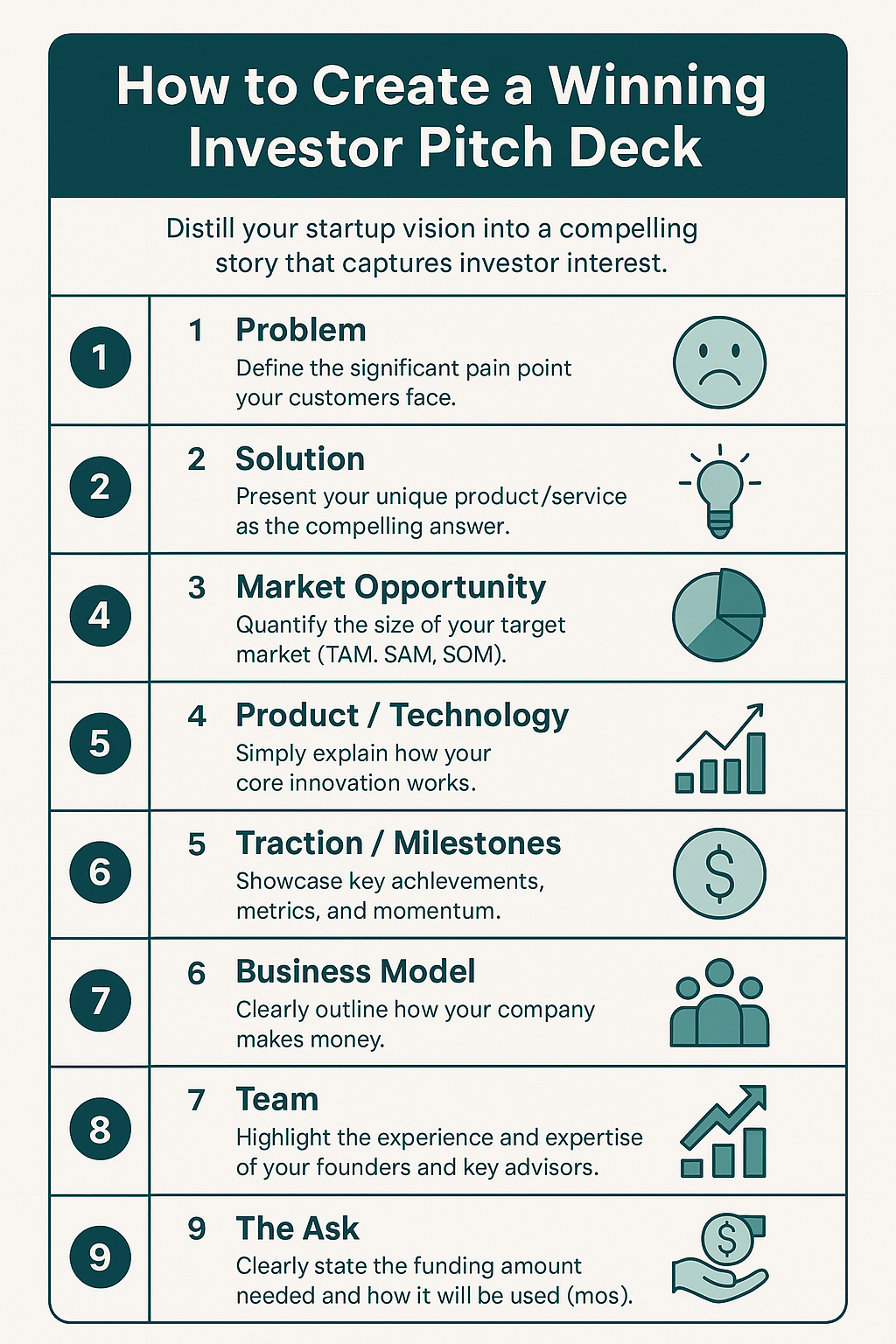
For more insights on attracting investors, explore our guide on how to create a winning investor pitch deck.
Creative & Other Options
-
93. Barter Agreements
Trade your goods or services directly for other essentials your business needs, minimizing cash outflow and preserving capital. This is effective for acquiring services or products without cash transactions.
-
94. Revenue-Based Financing (RBF)
Receive capital in exchange for a percentage of your future revenue, with repayment tied directly to your earnings. This is flexible, often non-dilutive, and ideal for predictable revenue businesses like SaaS.
-
95. Licensing Deals
Monetize your intellectual property (IP) by granting others permission to use it in exchange for royalties or fees, without diluting your ownership. This generates recurring revenue from existing assets.
-
96. Strategic Partnerships & Joint Ventures
Forge alliances with other businesses that can provide funding, resources, market access, or shared expertise in exchange for a share of profits or other agreed-upon terms. This can accelerate growth and reduce costs.
-
97. Mergers or Acquisitions
Combine with or be acquired by another company to access significant capital, expand market reach, and accelerate growth. This is a significant strategic move, often resulting in a substantial liquidity event.
-
98. Incubator & Accelerator Programs
Join programs that provide mentorship, resources, and often a small amount of seed funding (in exchange for a small equity stake) to help rapidly develop and scale your startup. Forbes Advisor on Accelerators.
-
99. Business Plan Competitions
Participate in local, regional, or national business plan competitions that award cash prizes, mentorship, and exposure to promising startups. These can be a significant source of non-dilutive funding.
-
100. Vendor Financing
Negotiate favorable payment terms or direct financing from your suppliers for raw materials or inventory. This is essentially short-term credit extended by your vendors.
-
101. Customer Prepayments/Deposits
Require customers to pay a portion or the full amount upfront for goods or services. This provides immediate cash flow for project initiation or production before delivery.
-
102. Leasing (instead of buying)
Lease expensive equipment or vehicles instead of purchasing them outright. This frees up capital that would otherwise be tied up in asset acquisition and can offer tax advantages.
-
103. Factoring Purchase Orders
Similar to invoice factoring, but specifically for confirmed purchase orders. A third party pays your supplier directly, and then collects from your customer upon delivery. This is distinct from regular PO financing.
-
104. Subscription-Based Models
If applicable, shift to a subscription or recurring revenue model. This provides predictable and consistent cash flow, which can reduce the need for external financing over time.
-
105. Crowdsourced Loans (Non-P2P Platforms)
Utilize platforms that facilitate direct loans from a collective of individuals or small investors, often with a social mission, but not structured as traditional peer-to-peer lending.
-
106. Product Presales / Pre-orders
Fund production or development of a new product by collecting payments from customers before the product is ready or shipped. This validates demand and provides upfront capital.
-
107. Tax Credit Financing
Monetize eligible tax credits (e.g., R&D tax credits) by selling them to third parties or using them as collateral for a loan, providing immediate cash flow based on future tax benefits.
-
108. Revenue Sharing Agreements (beyond RBF)
Partner with individuals or entities who provide capital or resources in exchange for a share of future profits or revenue, without taking an equity stake.
Find Your Ideal Funding Path!
Select a funding solution tailored to your startup’s unique needs:
Frequently Asked Questions
Which funding path is best for early‑stage startups?
For early-stage startups, consider bootstrapping with personal savings, utilizing 0% intro APR credit cards, or exploring Rollover for Business Startups (ROBS). Grants and unsecured business credit are also excellent non-dilutive options to explore.
Can I get funding without giving up equity?
Yes, absolutely. You can secure funding through various non-dilutive options such as traditional loans (SBA or bank loans), grants, certain types of crowdfunding (like rewards or donation-based), corporate credit cards, and creative financing methods such as licensing deals or revenue-based financing.
How do I build business credit fast?
To build business credit quickly, consider programs like Fund & Grow or Fundwise Capital that specialize in establishing business credit lines. Additionally, ensure you pay vendors on time, leverage corporate credit lines responsibly, and maintain timely payments across all business accounts. Consistent and responsible financial behavior is key.
What’s the difference between debt and equity funding?
Debt funding involves borrowing money that must be repaid, often with interest (e.g., loans, credit lines). The lender has no ownership in your company. Equity funding involves selling a portion of your company’s ownership in exchange for capital. Investors become shareholders and share in the company’s profits and losses, but there’s no obligation for repayment.
When should my startup seek external funding?
Seek external funding when you have a clear business plan, a proven concept or strong traction, and a solid understanding of how the funds will accelerate growth beyond what bootstrapping can achieve. It’s often ideal when you’re ready to scale, develop new products, or expand into new markets, but lack the internal capital to do so.
Do I need a business plan to get funding?
While not every funding source requires a formal, extensive business plan (especially for very early-stage bootstrapping or some grants), a well-thought-out plan or at least a comprehensive pitch deck is crucial for most external funding, especially loans, venture capital, and equity crowdfunding. It demonstrates your vision, market understanding, financial projections, and operational strategy.
What are common mistakes to avoid when seeking funding?
Common mistakes include not clearly defining your funding needs, failing to research and target appropriate investors/lenders, lacking a strong pitch or business plan, having unrealistic valuations, neglecting to build business credit early, and not understanding the terms and conditions of different funding options. Always be prepared, transparent, and persistent.
understanding, financial projections, and operational strategy.”}
},{
“@type”:”Question”,”name”:”What are common mistakes to avoid when seeking funding?”,
“acceptedAnswer”:{“@type”:”Answer”,”text”:”Common mistakes include not clearly defining your funding needs, failing to research and target appropriate investors/lenders, lacking a strong pitch or business plan, having unrealistic valuations, neglecting to build business credit early, and not understanding the terms and conditions of different funding options. Always be prepared, transparent, and persistent.”}
}
]
}