LLC vs C-Corp for Startups: Optimizing Your Structure for Funding
Table of Contents
- 1. Introduction: Your Business Structure is More Than Just a Name
- 2. The Core Difference: LLC vs. C-Corp at a Glance
- 3. Funding: The Ultimate Deciding Factor
- 4. Operational Differences: Beyond the Balance Sheet
- 5. Strategic Considerations for Startups
- 6. Key Partners to Help You Structure for Success
- 7. Switching Structures: When & How to Convert
- 8. Conclusion: Make an Informed Decision for Your Startup’s Future
- 9. Explore More Insights
1. Introduction: Your Business Structure is More Than Just a Name
When you’re launching a startup, the excitement is palpable. You’re focused on your product, your market, and finding your first customers. But beneath the surface of innovation lies a critical decision that can profoundly impact your ability to raise capital, manage operations, and scale for the future: your business legal structure.
For ambitious founders, the choice often boils down to two main contenders: the Limited Liability Company (LLC) and the C-Corporation (C-Corp). While both offer liability protection, their implications for funding, taxation, and growth strategies differ dramatically.
This comprehensive guide will cut through the jargon, helping you understand which structure is best suited to attract the funding you need and set your startup on a path to success.
2. The Core Difference: LLC vs. C-Corp at a Glance
Before diving into funding specifics, let’s establish the fundamental characteristics of each entity. Understanding these basics is crucial for grasping their impact on investment.
What is an LLC?
A Limited Liability Company (LLC) is a hybrid business entity that combines the pass-through taxation of a sole proprietorship or partnership with the limited liability of a corporation. This means the business’s profits and losses are “passed through” to the owners’ personal income without being subject to corporate tax rates. The owners are protected from personal liability for business debts or lawsuits.
What is a C-Corporation?
A C-Corporation (C-Corp) is a legal entity separate from its owners. It can be taxed, held legally liable, and enter into contracts. C-Corps are known for their ability to raise capital through the sale of stock, offering a structured ownership model with distinct classes of shares.
3. Funding: The Ultimate Deciding Factor
For most startups, the primary reason to choose a C-Corp over an LLC is the ability to attract substantial external investment.
Why VCs & Angel Investors Prefer C-Corps
Venture capitalists (VCs) and angel investors overwhelmingly favor C-Corporations for several key reasons:
- Standardization: The C-Corp structure is universally recognized and understood by investors. Its standardized legal and governance framework simplifies due diligence.
- Equity Ownership: C-Corps issue shares of stock, which are straightforward to track, transfer, and value. This makes it easy for investors to buy into the company and for founders to offer stock options to employees.
- Multiple Classes of Stock: C-Corps can issue different classes of stock (e.g., common for founders/employees, preferred for investors), allowing for complex investor rights and preferences. This flexibility is crucial for funding rounds.
- Liquidity Events: C-Corps are the standard structure for IPOs (Initial Public Offerings) and acquisitions, providing a clear exit path for investors to realize their returns.
- Tax Implications for Investors: Investors in C-Corps typically face simpler tax situations, avoiding the “pass-through” complications that can arise with LLCs, especially for institutional investors with complex tax structures.
When an LLC Can Still Attract Funding
While less common for venture capital, an LLC can still be a viable option for certain types of funding:
- Debt Financing: Small business loans (like those from the SBA), lines of credit, or term loans are readily available to LLCs. Partners like National Funding can help established LLCs access fast, flexible capital, and Amex Business Credit & Loans provide excellent options for building business credit.
- Friends & Family Rounds: Early-stage investments from non-institutional investors might be comfortable with an LLC, especially if the amounts are smaller and the tax implications are clear to all parties.
- Revenue-Based Financing: If your business is generating consistent revenue, you might secure funding based on future income, where the legal structure is less of a concern than your cash flow.
- Equity Crowdfunding: Platforms like StartEngine and WeFunder are revolutionizing access to capital by allowing you to raise funds from a broad base of investors, including your community. While many companies on these platforms are C-Corps, some LLCs have successfully raised capital, particularly if they clearly articulate their structure and future plans to investors. For a deeper dive into crowdfunding, check out our article on Equity Crowdfunding vs. Traditional Fundraising: Which is Right for You?
4. Operational Differences: Beyond the Balance Sheet
Choosing your business structure isn’t just about funding; it impacts your day-to-day operations, legal obligations, and tax burden.
Formation & Compliance
- LLC: Generally simpler and less expensive to form and maintain. They have fewer ongoing compliance requirements (e.g., no strict board meetings, less formal record-keeping).
- C-Corp: More complex formation process, requiring articles of incorporation, bylaws, and often a board of directors. They have stringent compliance rules, including regular board meetings, detailed minutes, and careful stock issuance records.
Recommendation: No matter your choice, ensure your business is formed correctly from the start. Northwest Registered Agent is our top recommendation for their transparent pricing, excellent service, and privacy-first approach to forming your LLC or C-Corp and handling registered agent services.
Taxation: The Double-Edged Sword (for C-Corps)
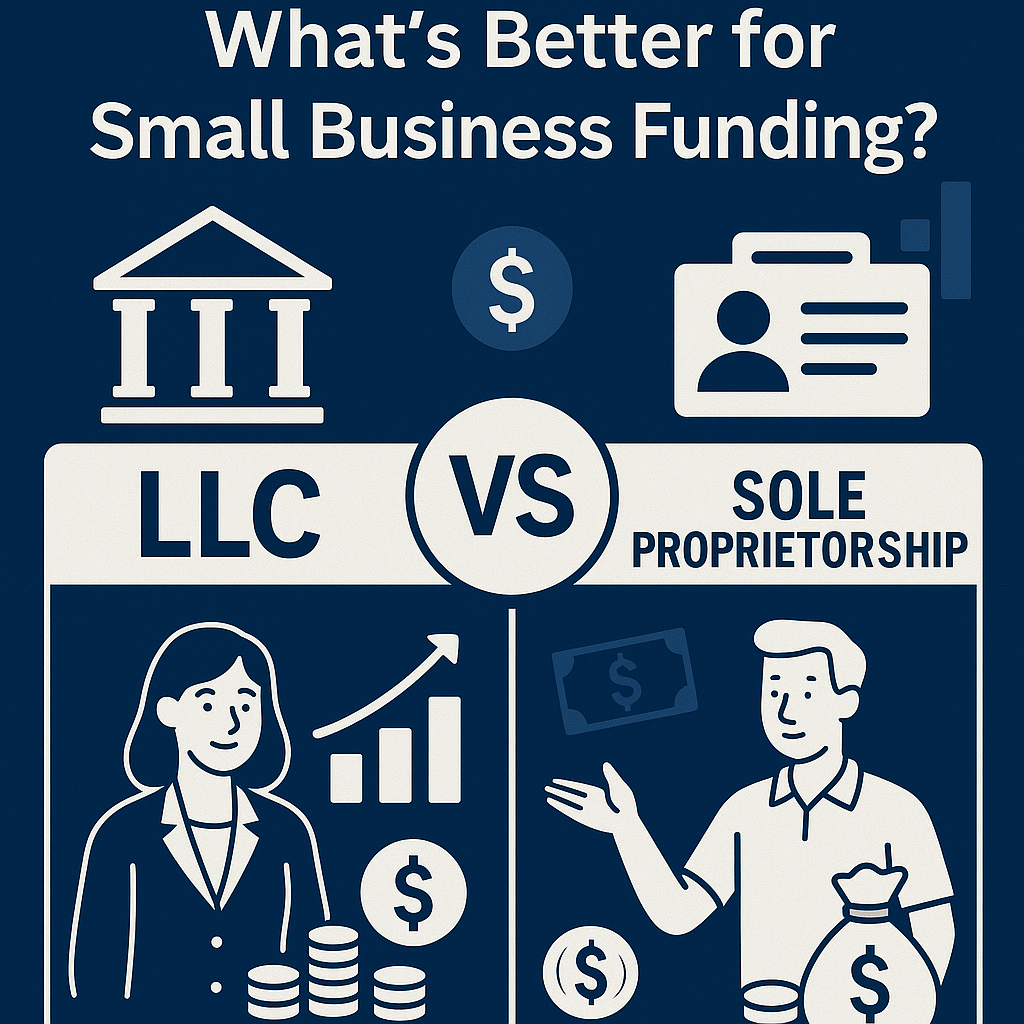
- LLC (Pass-Through Taxation): Profits and losses are passed directly to the owners’ personal tax returns. This avoids “double taxation” (taxation at the corporate level and again at the individual level when profits are distributed). Owners typically pay self-employment taxes.
- C-Corp (Double Taxation): The corporation pays taxes on its profits, and then shareholders pay taxes again on dividends received. This is the “double taxation” often cited as a drawback. However, strategic founders can mitigate this through reinvesting profits, paying reasonable salaries, and offering benefits.
Recommendation: Efficient accounting is vital for any structure. Xero Accounting Software offers robust, cloud-based solutions to keep your books clean and provide real-time financial insights. For done-for-you bookkeeping and tax filing, Bench.co provides dedicated human bookkeepers, freeing you to focus on growth.
💼 Try Xero — Get 90% Off for 6 Months
📘 Get Started with Bench Bookkeeping
Management & Flexibility
- LLC: Offers immense flexibility in management structure. Owners can manage the business directly, or they can appoint managers. The operating agreement dictates roles and responsibilities.
- C-Corp: Has a more rigid hierarchy: shareholders elect a board of directors, who then appoint officers (CEO, CFO, etc.) to manage daily operations.
Legal Liability
Both LLCs and C-Corps provide limited liability protection, meaning the personal assets of owners are generally shielded from business debts and lawsuits. This is a primary advantage over sole proprietorships or partnerships.
5. Strategic Considerations for Startups
Beyond the fundamental differences, consider these strategic elements vital for a scaling startup:
Scalability & Future Growth
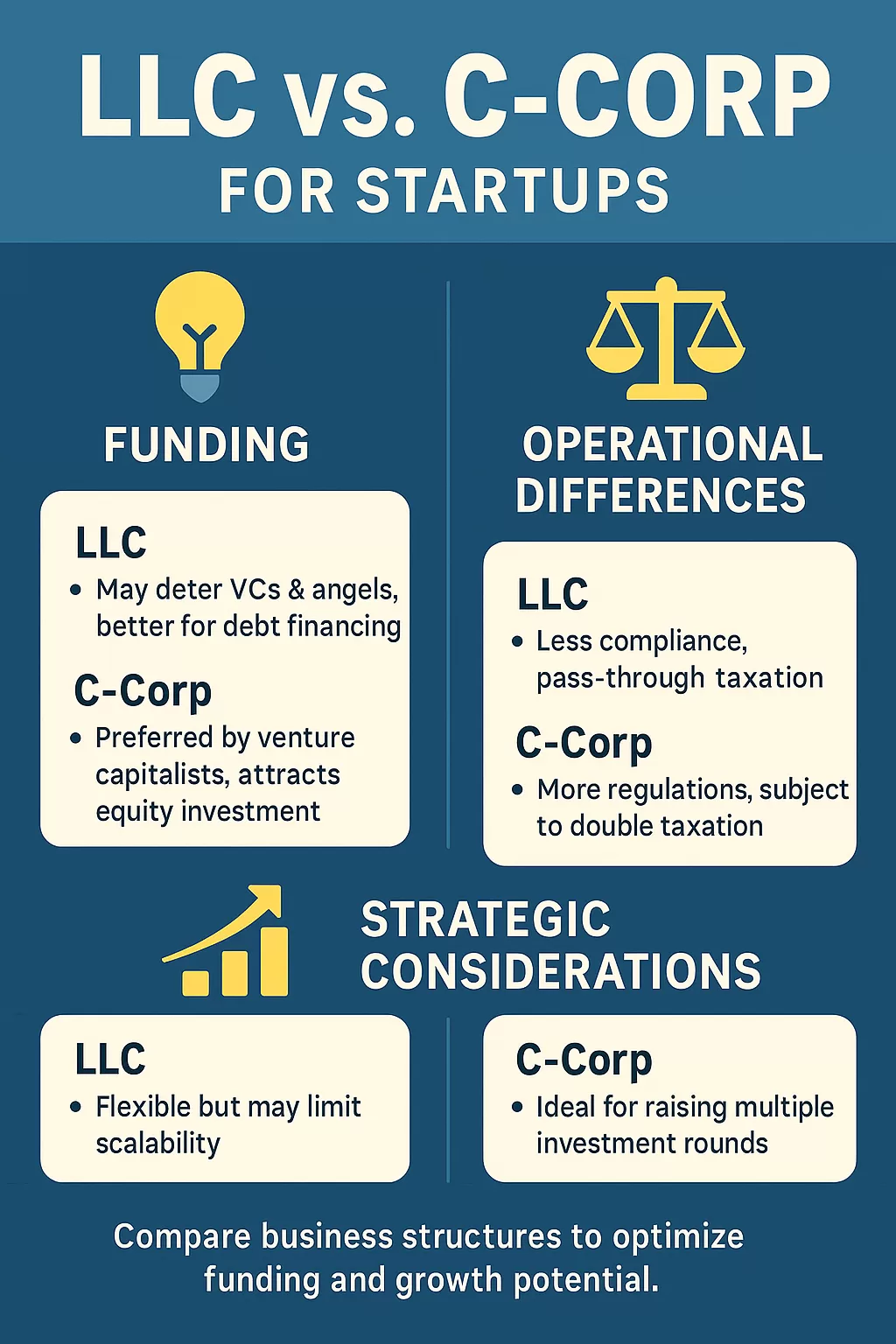
- C-Corp: Designed for rapid scalability. The ability to easily issue and transfer shares makes it ideal for raising multiple rounds of investment, attracting a large number of investors, and preparing for an acquisition or IPO.
- LLC: While an LLC can scale, its structure can become cumbersome with many investors or complex ownership changes, often requiring conversion to a C-Corp before major funding rounds.
Employee Stock Options (ESOPs) & Attracting Top Talent
- C-Corp: The standard vehicle for offering equity compensation (stock options or restricted stock units) to employees. This is a powerful tool for attracting and retaining top talent in competitive startup environments.
- LLC: Can offer “profit interests” or similar equity-like incentives, but these are more complex and less familiar to employees and legal teams than traditional stock options.
Recommendation: As your team grows, efficient HR and payroll are non-negotiable. Gusto simplifies payroll, HR, and benefits, ensuring compliance and freeing up your time to focus on your team and growth.
6. Key Partners to Help You Structure for Success
No matter your chosen structure, surrounding yourself with the right tools and partners is essential.
- Setting Up Your Entity:
- Northwest Registered Agent: Your go-to for secure and reliable business formation and registered agent services. They prioritize your privacy and offer transparent pricing.
→ Form Your Business with Northwest Registered Agent
- Northwest Registered Agent: Your go-to for secure and reliable business formation and registered agent services. They prioritize your privacy and offer transparent pricing.
- Managing Your Finances:
- Xero Accounting Software: For modern, cloud-based accounting that keeps your books clean and integrates with essential business tools.
💼 Try Xero — Get 90% Off for 6 Months - Bench.co: Take bookkeeping and tax filing off your plate with a dedicated team and intuitive software.
📘 Get Started with Bench Bookkeeping
- Xero Accounting Software: For modern, cloud-based accounting that keeps your books clean and integrates with essential business tools.
- Streamlining HR & Payroll:
- Gusto: The all-in-one solution for payroll, benefits, and HR, designed for small businesses to simplify compliance and people management.
➡️ Get Started with Gusto for Payroll & HR
- Gusto: The all-in-one solution for payroll, benefits, and HR, designed for small businesses to simplify compliance and people management.
- Leveraging Funding Solutions:
- National Funding: For established businesses seeking fast working capital loans.
→ Explore National Funding - Amex Business Credit & Loans: Build robust business credit and manage expenses with premium credit solutions.
👉 Get Matched with Amex Offers - FundWise Capital: Specializes in unsecured funding for startups, leveraging personal credit.
✅ Apply for Startup Funding with FundWise - Fund&Grow: A unique membership to secure 0% interest business credit lines for growth.
🚀 Learn About 0% Business Credit with Fund&Grow - StartEngine & WeFunder: Leading equity crowdfunding platforms to raise capital from your community and beyond.
🚀 Request a Warm Intro to StartEngine - 🌱 Raise on WeFunder — Start Here
- National Funding: For established businesses seeking fast working capital loans.
7. Switching Structures: When & How to Convert
It’s not uncommon for a startup to begin as an LLC for its simplicity and then convert to a C-Corp when seeking institutional funding. This process, often called “flipping” or “conversion,” involves legal and tax complexities.
- When to Consider: Typically, this happens when a startup anticipates raising a significant seed or Series A round from VCs or angel groups who require a C-Corp.
- How: The process involves legal filings (Articles of Conversion/Merger), updating bylaws, and often a tax-free reorganization (though always consult a tax advisor). Early conversion is generally simpler than later.
8. Conclusion: Make an Informed Decision for Your Startup’s Future
The LLC vs. C-Corp decision is foundational for your startup’s trajectory, particularly when it comes to attracting investment. While an LLC offers simplicity and tax flexibility, the C-Corp remains the preferred vehicle for venture capital and angel funding due to its standardized structure for equity, investor rights, and exit opportunities.
Consider your long-term goals:
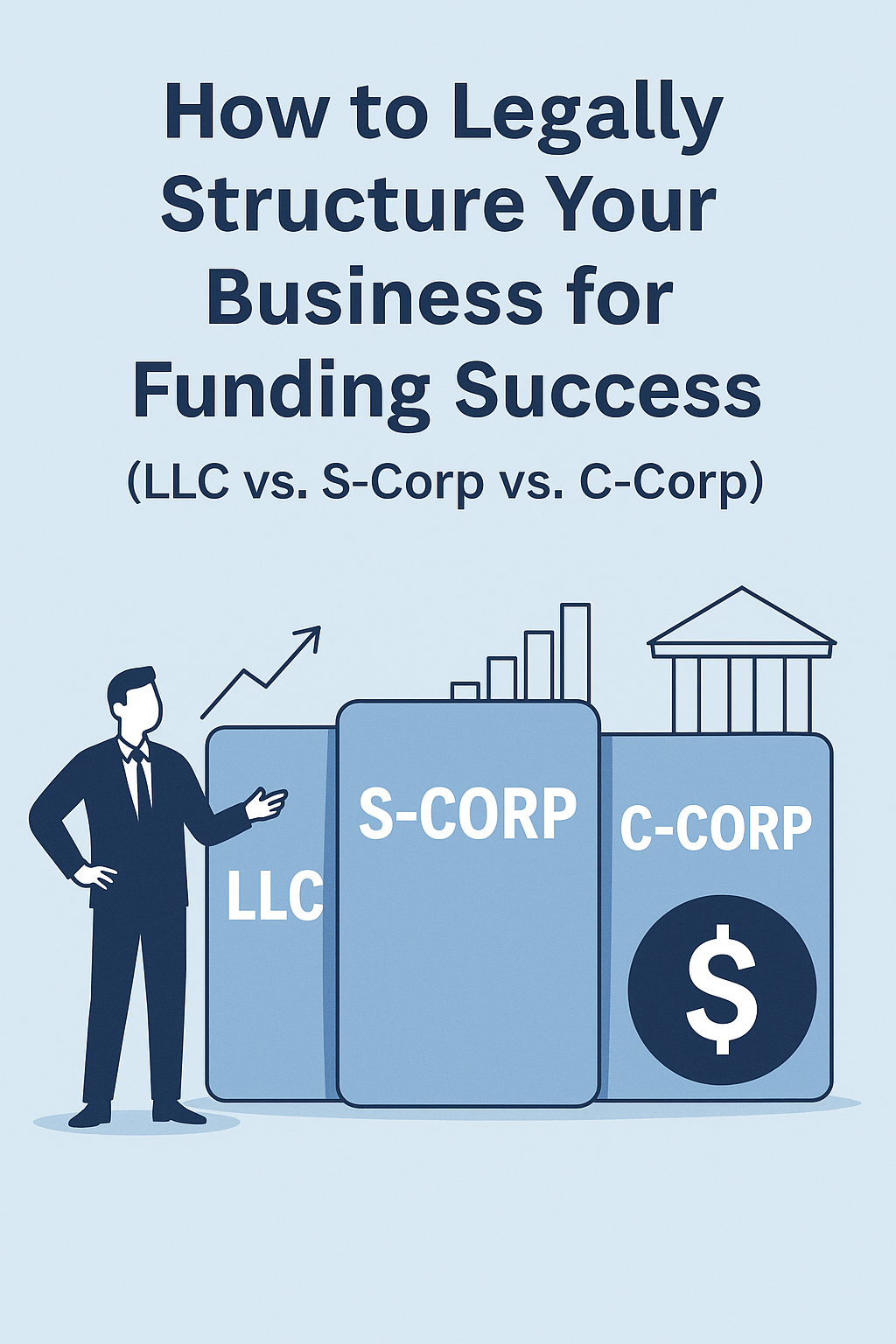
- If your primary aim is to operate a straightforward business with pass-through taxation and you don’t foresee raising significant institutional capital, an LLC might be a perfect fit.
- If you envision rapid growth, multiple funding rounds from VCs, attracting top talent with stock options, and a potential acquisition or IPO, starting as (or converting to) a C-Corp is the strategic move.
Whichever path you choose, ensuring proper legal formation and robust financial management from day one will set your business up for success.
9. Explore More Insights
Ready to dive deeper into specific topics that empower your entrepreneurial journey? Our blog is packed with expert insights and actionable guides.
- Your Comprehensive Business Loan Approval Checklist – Learn what you need to get funding for your business.
- How to Build Business Credit with Fundwise & Fund&Grow (2025 Guide) – Deepen your understanding of business credit and these powerful tools.
- Business Credit vs. Business Loan: Which One Fuels Growth? – Understand the nuances of different funding types.
- How to Create a Winning Investor Pitch Deck for Angel & Seed Funding – Craft a compelling presentation for potential investors.
- Small Business Grants Guide: Unlocking Non-Dilutive Funding – Discover opportunities for grants that don’t require giving up equity.
- For official information on business structures and taxation, consult the IRS website or a qualified legal/tax professional.